Buoyancy control feels tricky when you start out. You watch your instructor hang motionless in the water and wonder how on earth they do it. There’s no trick to it. With these five tips and some practice, you’ll get there too.
Why good buoyancy matters
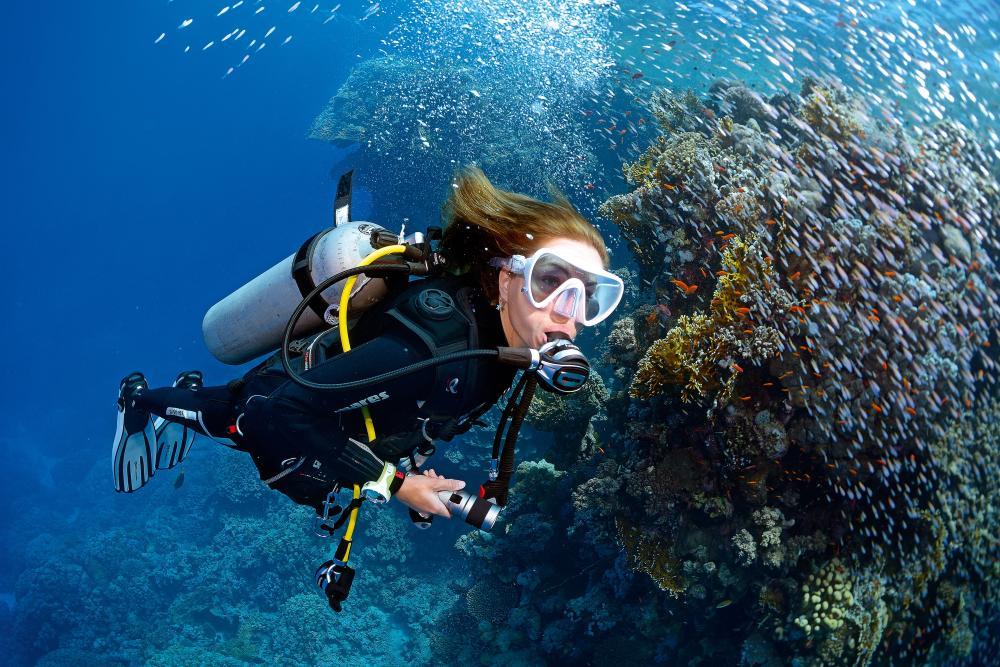
Good buoyancy does a lot more than make you look good in underwater photos:
-
Better visibility
: Hover steady and you won’t kick up sand and silt, so you and the divers around you can actually see.
-
Protecting marine life
: When you’re not bumping into things, you won’t damage coral or other fragile life on the reef.
-
Safety
: Stay off the bottom and you’re far less likely to scrape against sharp coral, venomous creatures, or debris.
-
Saving air
: Stay relaxed and you’ll use less energy, breathe slower, and your tank lasts longer.
-
Safety
: Good control keeps you from shooting up or dropping too fast, which keeps you out of trouble underwater.
The five tips for sorting out your buoyancy
1. Do a buoyancy check:
- Work out the right amount of weight for the dive. As a rough start, it’s about ten percent of your body weight.
- With all your gear on, start at the surface with a fully inflated BCD (Buoyancy Control Device) and your regulator in your mouth.
- Deflate the BCD completely; if you’re correctly weighted, you should remain at the surface, and a deep breath out should make you descend.
2. Adjust gradually:
- Avoid overinflating your BCD. Add air in short bursts until you achieve neutral buoyancy.
- When releasing air, do so slowly and in an upright position with the inflator hose held high above your head.
3. Take a buoyancy specialty course:
- Sign up for a Perfect Buoyancy specialty course. You get proper training and some genuinely fun underwater drills that really dial it in.
4. Choose the right weight system:
- Try a few different weight systems and see what suits you best.
- Weight belt: spreads the weight evenly around your waist.
- Integrated weights: built into some BCDs, easy to adjust and they help keep you flat in the water.
5. Stay relaxed:
- Relaxing comes with time in the water, so don’t expect it on dive one.
- Work on your breathing on land, even a bit of meditation. A calmer head means slower, steadier breaths, and that steadies your buoyancy.
Stick with these and your buoyancy will come together on your next few dives.
Plan your dive: Want to fine-tune it with an instructor? Try our PADI Peak Performance Buoyancy course in Goa.