
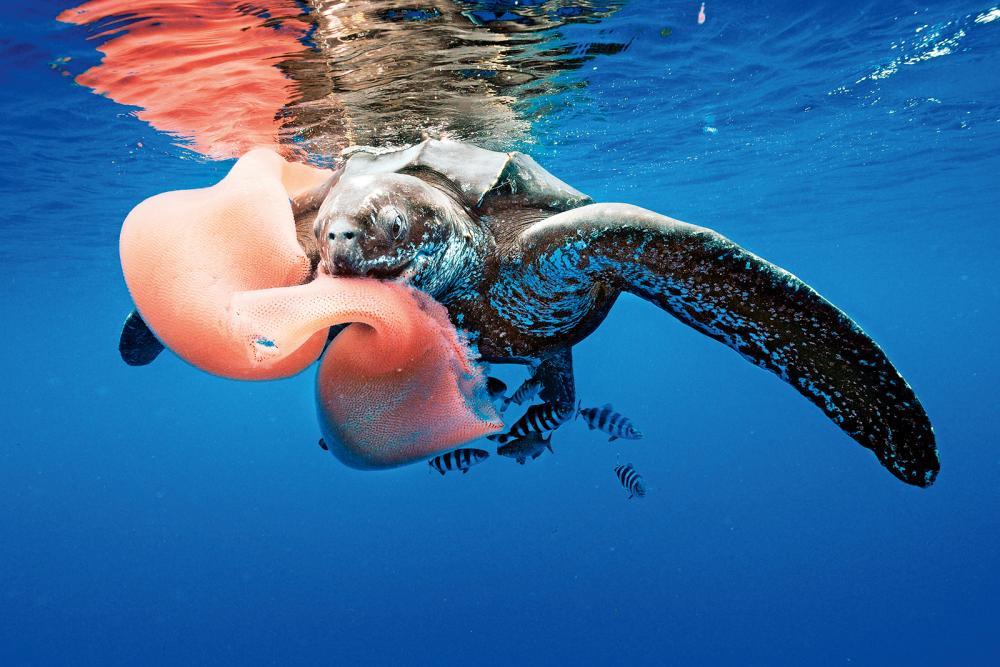
Turtles are ancient, calm creatures, and spotting one on a dive is always a good day (if you’re lucky enough to find one). They’ve been around for over 200 million years and can travel thousands of miles in a lifetime. To feed your curiosity, and maybe win your next trivia night, we’ve put together a set of turtle facts. Read on for 11 turtle facts and a simple way to tell apart the seven species.
11 turtle facts
Turtles are one of the oldest reptile groups, going back more than 200 million years. All seven sea turtle species are either endangered or threatened, so conservation matters. Only about one in a thousand hatchlings makes it to adulthood. Travel habits vary by species: leatherbacks cover thousands of miles a year, while hawksbills tend to stay closer to home. Diets vary too. Most eat jellyfish, and some go for sea grass, crustaceans, or sea sponges. Nest temperature decides whether the hatchlings come out male or female. Turtles have no teeth; they use a beak to grab their food. Their shells are made of fused bones, which makes for tough armor. The largest sea turtle on record reached 2.5 meters (8.2 feet) in length and width and weighed over 900 kilograms (1984 pounds). Females return to the beach where they hatched to lay their own eggs. And they can sense Earth’s magnetic field, which helps them navigate.
Want to swim with turtles but not sure where to start? Check out our top 4 destinations for swimming with them.
How to tell the turtle species apart
Telling the seven sea turtle species apart is easier than you’d think. Here’s a quick guide to what sets each one apart:
Green Turtle
Average Carapace (Shell) Size: 78-112cm/31-44in Average Weight: 68-190kg/150-419lb Habitat: Tropical and subtropical waters across the globe. Distinctive Traits: A greenish body hue with dark brown/black and yellow markings on the head and limbs, small head with one pair of prefrontal scales above the eyes, and an oval or heart-shaped shell with large, non-overlapping scales.
Hawksbill Turtle
Average Carapace Size: 61-91cm/24-36in Average Weight: 45-68kg/100-150lb Habitat: Tropical and subtropical waters in the Atlantic, Pacific, and Indian Oceans. Distinctive Traits: Amber-colored shells with large overlapping scales, a pointed beak on a tapered head, and claws on each flipper.
Leatherback Turtle
Average Carapace Size: 130-183cm/51-72in Average Weight: 300-500kg/660-1100lb Habitat: Migration routes extending as far north as Canada, with nesting on tropical beaches. Distinctive Traits: The world’s largest turtle species. The leatherback has a single-piece shell with five ridges and dark skin with white or pink spots.
Loggerhead Turtle
Average Carapace Size: 90cm/35in Average Weight: 70-187kg/155-412lb Habitat: Tropical and temperate waters across the Pacific, Atlantic, and Indian Oceans. Distinctive Traits: Yellow-brownish skin, a red-brown heart-shaped shell, and a large, heavy head that gives the species its name.
Flatback Turtle
Average Carapace Size: 76-96cm/30-38in Average Weight: 70-90kg/155-200lb Habitat: Coastal waters of Australia and Papua New Guinea. Distinctive Traits: A smooth, dome-shaped shell with upturned edges, an olive-green or gray shell, head, and limbs, and a pale yellow underside.
Kemp’s Ridley Turtle
Average Carapace Size: 70cm/28in Average Weight: 32-45kg/70-100lb Habitat: Temperate to subtropical waters in the western Atlantic and Gulf of Mexico. Distinctive Traits: Recognizable by its triangular head, slightly hooked beak, large flipper claw, and gray-green circular shell.
Olive Ridley Turtle
Average Carapace Size: 60-76cm/24-30in Average Weight: 45-50kg/100-110lb Habitat: Tropical regions worldwide. Distinctive Traits: An olive-green, heart-shaped shell, a smaller head, and a shell compared
Plan your dive: Want to try it yourself? Our first-time scuba dive in Goa starts at ₹2,970, with a certified instructor beside you the whole time.