
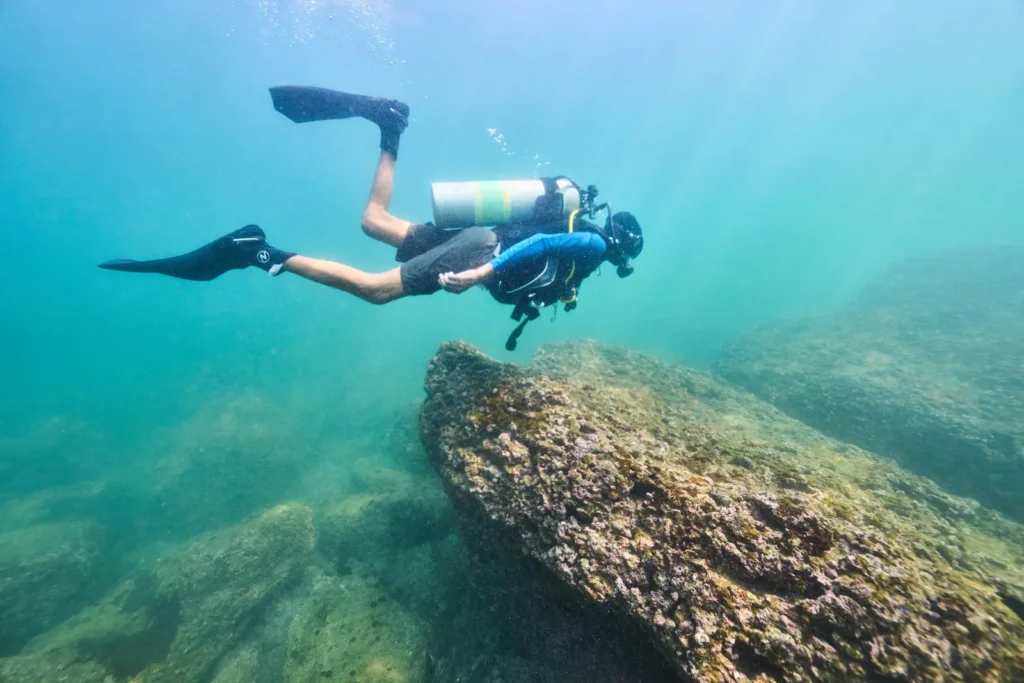
The best time for scuba diving in Goa is November to March. The sea is calmest then, and visibility at Grande Island is at its best, with February and March usually the clearest. The season runs from early October to the end of May. From June to September the monsoon closes the sea, and dive boats do not go out.
The short version, if you are planning a trip:
- November to March has the calmest sea.
- February and March usually have the clearest water.
- Late October and April have the quietest boats.
- The week from Christmas to New Year is the busiest of the season.
- June to September is closed for the monsoon.
- The water stays at 27 to 30°C all season.
- Visibility is 2 to 15 metres, depending on the day.
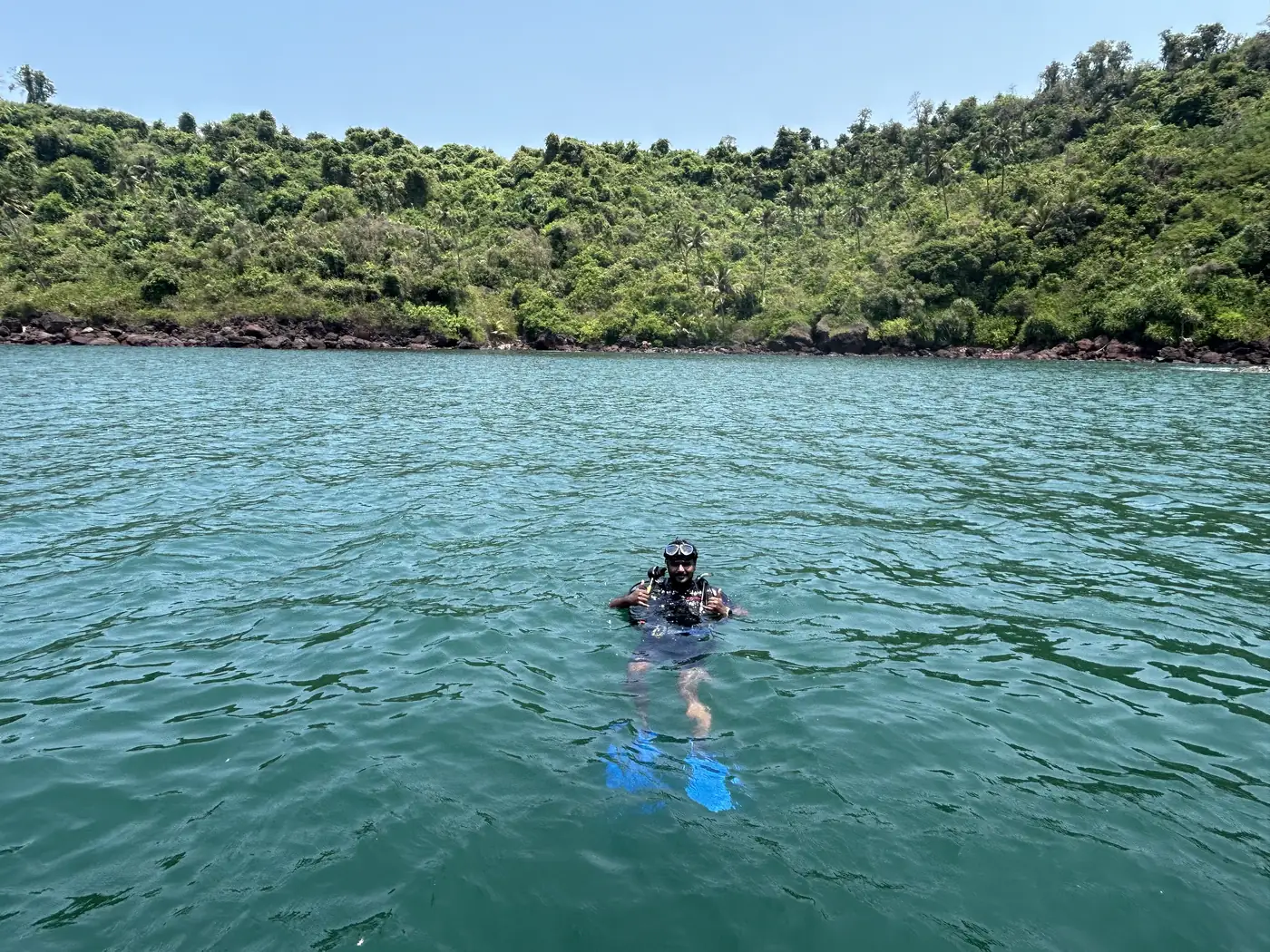
I spent more than 25 years in TV news before I opened a dive school, and one newsroom habit never left me: check it twice before it goes out. We treat the sea the same way. We watch the conditions every day of the season, and if the water is not right, the boat stays at the jetty.
So when someone asks me which month is best, my honest answer is that every month from October to May can give you a good dive. Some months just give you better odds.
Month by month: what the sea is like in Goa
October settles, November to March is calm and clear, April and May are warm with choppier afternoons, and June to September is closed.
| Month | Sea | Visibility | Water | Crowds | Verdict |
|---|---|---|---|---|---|
| October | Settling, some swell early on | 3–6 m | 29°C | Quiet | Good after mid-month |
| November | Calm most mornings | 5–10 m | 28–29°C | Moderate | Very good |
| December | Calm and settled | 5–15 m | 27–28°C | Busy, peak at Christmas | Very good, book early |
| January | Flat, calm mornings | 5–15 m | 27–28°C | Busy in the first week | Very good |
| February | Calm, weak currents | 5–15 m | 27–28°C | Moderate | Best of the year |
| March | Calm, warming up | 5–15 m | 28–29°C | Moderate | Best of the year |
| April | Calm mornings, choppy afternoons | 3–8 m | 29–30°C | Quieter | Good, dive early |
| May | Like April, swell late in the month | 3–8 m | 29–30°C | Quieter | Good until 31 May |
| June to September | Monsoon | Closed | Closed |
Treat these as the usual ranges. A rough night can bring any month down to 2 or 3 metres, and a still week in November can surprise you with 10 or more. The sea decides.
Why is the water clearer in some months?
Mostly because of the rivers.
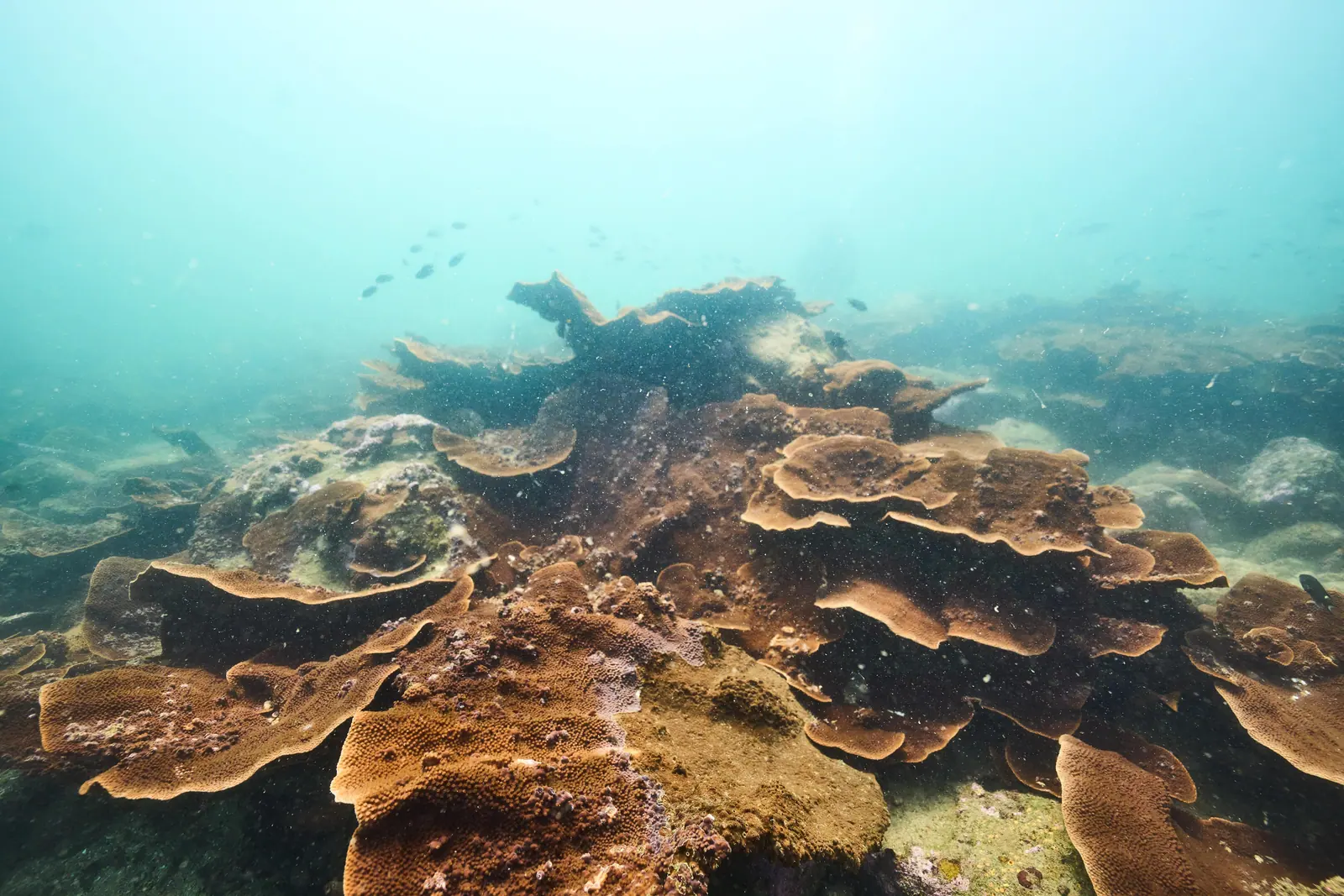
Two big rivers, the Mandovi and the Zuari, reach the sea in central Goa, not far from Grande Island. In the monsoon they bring down huge amounts of rainwater and silt from the Western Ghats. That silt hangs in the sea for weeks after the rain stops.
Through October and November it slowly settles. By December the rivers are low, and after months of dry weather, February and March usually give us the clearest days of the year.
The same fine particles are why Goa’s sea looks green rather than deep blue. They scatter the light.
This is a coastal sea fed by rivers, and I would rather you know that before you come than find out on the boat. Expect warm, green-blue water with plenty of fish, and you will enjoy it.
What do these visibility numbers look like underwater?
Visibility means how far you can see ahead of you underwater.
At 2 or 3 metres you see your instructor, the rock in front of you and the fish that come close. It feels small, but it is a good day for little things: nudibranchs, a moray eel in its hole, a pufferfish under a ledge.
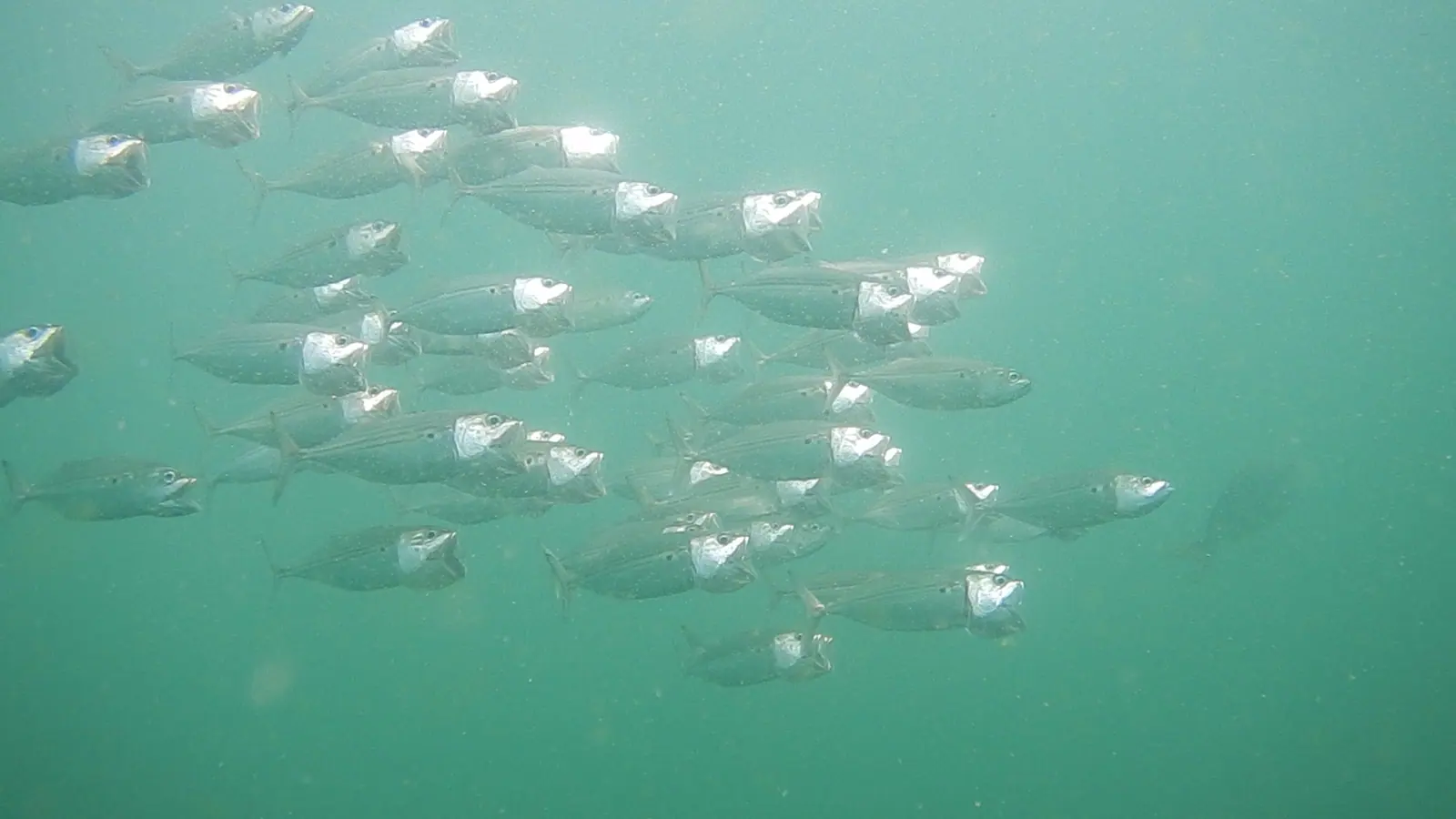
A lot of our dives in the season fall somewhere between 5 and 8 metres. That is enough to see a stretch of reef, and a school of fish as it passes.
Then there are the 10 to 15 metre mornings, when you can see the shape of the wreck from a distance and the divers ahead of you. Those are the dives people talk about on the boat back.
For a first dive, 5 metres is plenty. You stay close to your instructor and the reef anyway. I have watched first-timers come up from a low-visibility day smiling just as widely as anyone.
Which month is best for you?
If your holiday dates are already fixed, any month in season will work. If you can still choose, this is what each part of the season is like.
October: the sea settles
Our season opens in early October (this season, on 9 October). The first weeks can still have some leftover swell, and visibility is often 3 to 6 metres while the monsoon silt settles.
By the second half of the month the sea usually calms down, and the boats are quiet. If your holiday is fixed for October, come anyway. Just try to dive after the 15th.
November: a good balance
By November the wind has turned and blows off the land. The sea is flat on most mornings, and visibility climbs towards 10 metres. The holiday crowds have not arrived yet.
People often ask me for one month that gets everything right. I usually say the second half of November.
December and January: the best seas and the busiest boats
These are the calmest, most settled months, and they are also the busiest. The week from Christmas to New Year is the fullest of the whole season.
The diving is good, but you need to plan. Book a week or more ahead for the holidays.
This season, the 20-minute dive is not available from 28 December to 1 January. The 40-minute dive, the 20+20, courses and fun dives run as usual on those dates.
Early January is still busy. By the middle of the month, the boats start to feel normal again.
February and March: the clearest water
If clear water is what you want most, come in February or March. The rivers have been low for months and the currents are usually weak. Most of our clearest days fall in these weeks.
The holiday crowd has gone home by then. For certified divers it is also the best time to ask about Sail Rock, a rocky pinnacle that goes to about 24 metres. We take only Advanced divers there, and only when the sea allows.
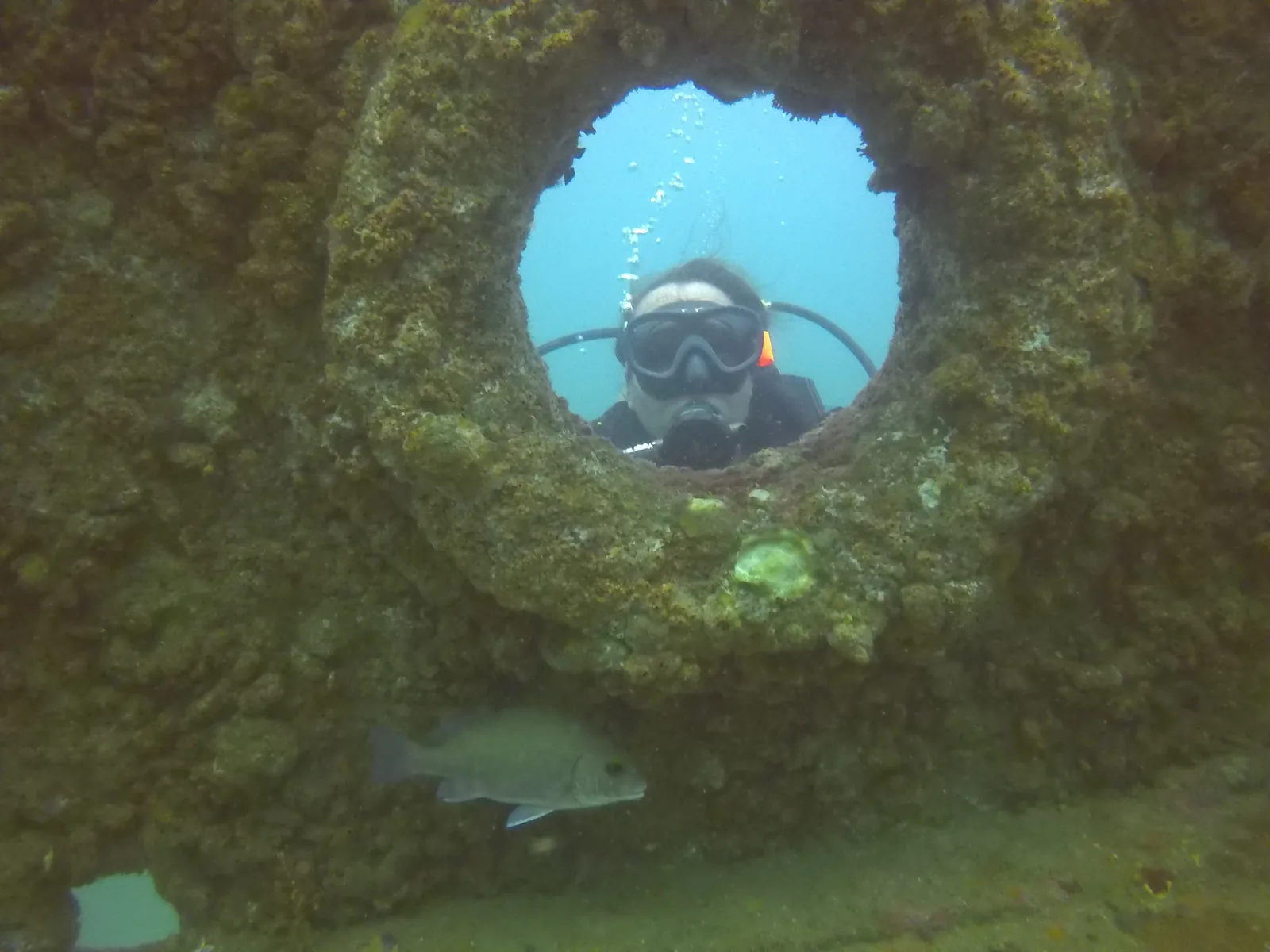
April and May: warm water, early starts
The water is at its warmest now, 29 to 30°C. Mornings are usually calm, but the wind picks up after midday and brings chop, so the early start matters even more in these months.
Visibility drops a little, often 3 to 8 metres, and swell builds towards the end of May. The season closes on 31 May. April is a good month that a lot of people overlook, because they assume the season is already over.
June to September: closed for the monsoon
The monsoon makes the sea rough and dangerous, and the harbour authorities restrict boat trips. We do not dive in these months, and nobody should.
If anyone offers you a sea dive in Goa in July, say no and come back in October.
Does the time of day or the moon matter?
Yes, both, though less than the month you pick.
The time of day matters most, because the sea is calmest in the morning. As the land heats up, a breeze comes in off the sea, usually after midday, and it brings chop.
This is strongest in April and May. That is why our boats leave in the morning.
The moon matters too. Around full moon and new moon the tides are bigger. These are called spring tides, and the stronger water movement can stir up sand and silt, so visibility often drops.
In the weeks of the half moon (neap tides), the water moves less and often clears. Divers also like slack water, the short pause when the tide turns and there is almost no current.
You cannot plan a short holiday around the moon, and you do not need to. Our instructors choose the site on the day, based on the sea and your certification.
On a choppy day that might be the sheltered water of Shelter Cove or Bounty Bay. Sail Rock waits for calm days.
What a dive morning looks like in season
Dive days start early.
For a first dive, you arrive at the Novotel pool in Candolim at about 6:30 to 7 am. Our instructors teach you to clear your mask, equalise your ears and use hand signals in water where you can stand. There is tea, and the final payment.
At about 8:30 the boat leaves Sinquerim jetty for Grande Island, roughly 30 minutes away. Dolphins are often seen on the way, though we never promise them. At the island you get a briefing, then the dive.
First-timers dive with SDI Scuba Discovery. SDI (Scuba Diving International) is a worldwide training agency, founded in 1998.
You go no deeper than 9 metres (30 feet), with your own SDI-certified instructor beside you, one to one. Our underwater photographer takes your photos and video, so your instructor’s hands stay free for you.
You are back on the mainland in the early afternoon, and the photos come to you the same evening.
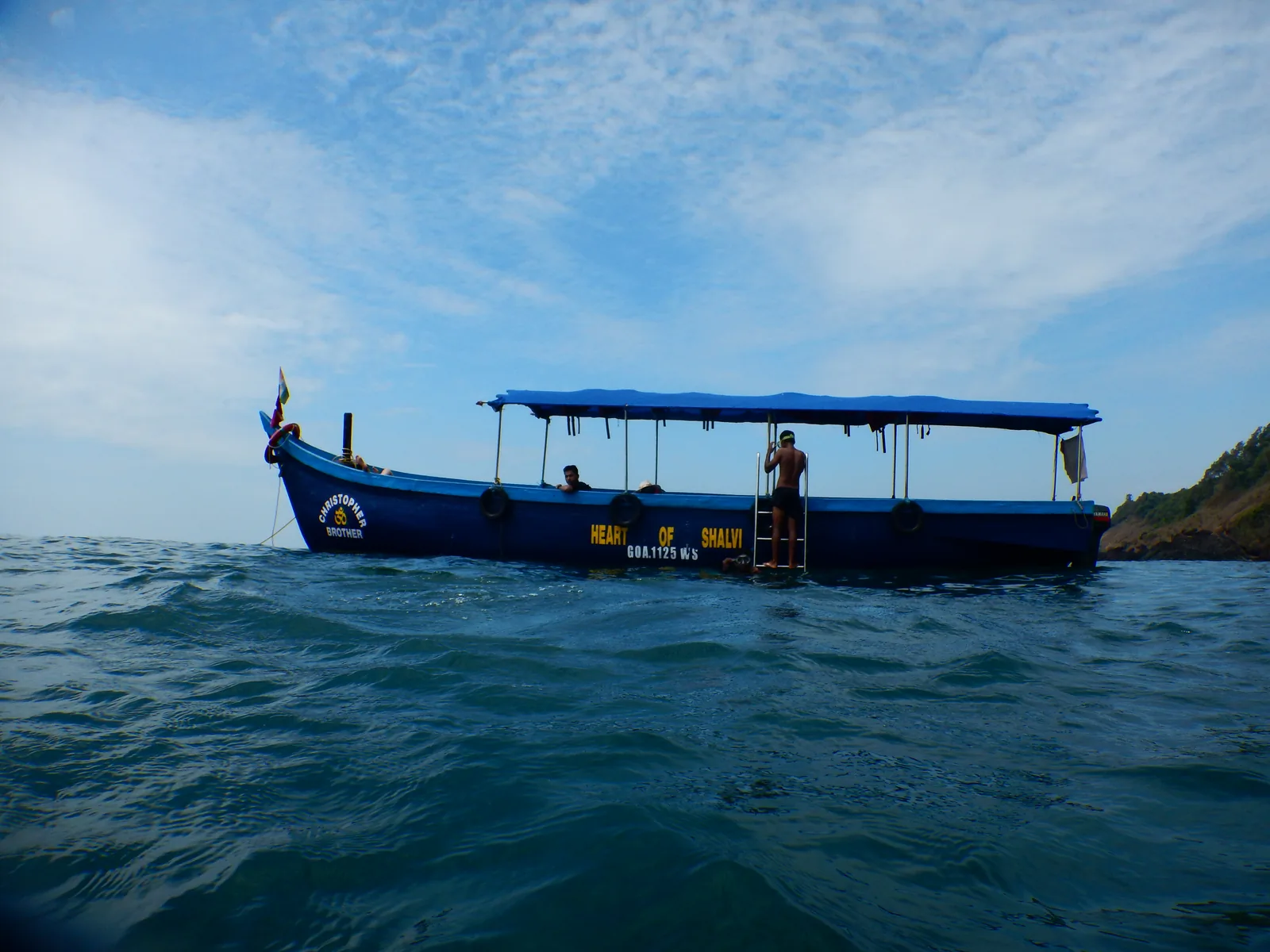
What if the sea is wrong on your day?
Then the boat does not go, and we tell you as early as we can.
If we cancel your dive because of weather or an unsafe sea, you choose: a full refund of everything you paid, or a free move to the next available date. This happens most often in early October and late May, when the season is starting or ending. It can happen in any month, though.
If diving matters to you, plan it for the first or second day of your holiday, never the last. That leaves room to move it if the sea says no, and it keeps the flying rule easy (more on that below).
Is Goa worth it if you want clear blue water?
If clear blue water is the only thing you want, Goa is not the place for it.
Offshore islands like the Andamans, or Netrani off the Karnataka coast, are far from the river mouths and much clearer. They also take more time and money to reach, and they are not where we dive.
Goa’s strength is that it is easy. A pool session and a short boat ride fit into a beach holiday, the water is warm, and the sheltered sites suit beginners.
There is a British-era wreck, and the reef has groupers, snappers, barracuda and moray eels. Many of our guests did not come to Goa to dive at all. They came on holiday and spent one morning in the sea.
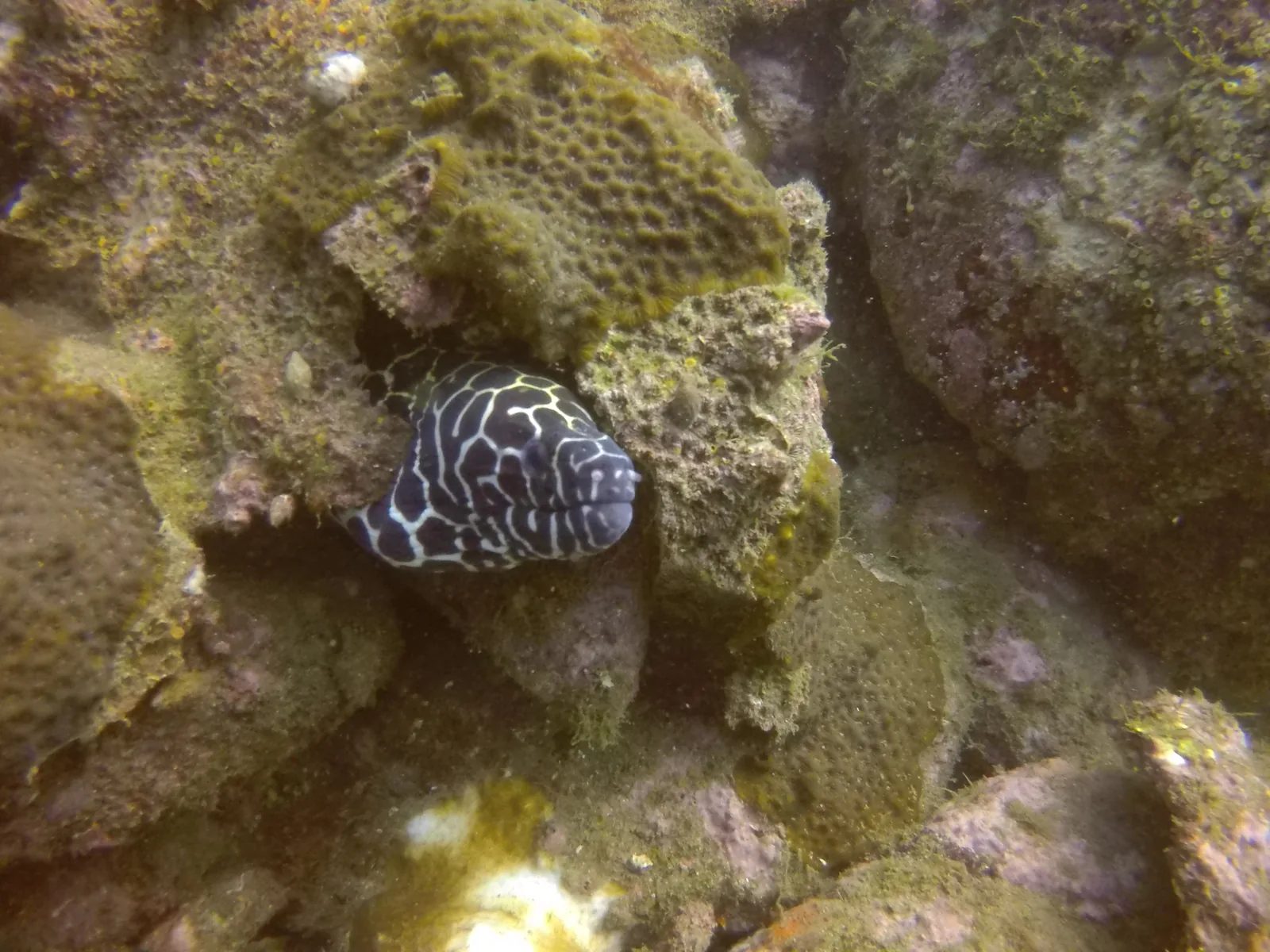
The marine life in Goa guide lists the 94 species we have recorded around the island, with photos.
Plan your dive: Coming between October and May? Our first-time scuba dive in Goa starts at ₹2,970 + GST, with an SDI-certified instructor beside you the whole time.
Planning tips for your dive days
Most of the problems I see on dive days are about timing.
- Book two or three days ahead in season. For Christmas and New Year, book a week or more ahead.
- Dive early in your trip, so a rough morning costs you nothing.
- Leave time before your flight: at least 18 hours after a single dive, and 24 hours after two or more dives or a course. Our list of things not to do after diving explains why.
- If you are certified, bring your card. Haven’t dived for six months? We include a pool refresher with your fun dives. Fun dives start at ₹4,950 + GST for two dives.
- Diving as a group, with some people trying it and others snorkelling? You can put everyone in one booking on build your own dive.
Every price, for every dive and course, is on our scuba diving in Goa price page.
Questions people ask us
Is scuba diving open in Goa now?
Scuba diving in Goa is open from early October to the end of May. This season we dive daily from 9 October 2026 to 31 May 2027, when the sea allows. From June to September the sea is closed for the monsoon.
Is October a good time for scuba diving in Goa?
Yes, especially the second half of the month. The first weeks can have leftover swell and 3 to 6 metres of visibility while the monsoon silt settles. By late October the sea is usually calm and the boats are quiet.
Can you go scuba diving in Goa during the monsoon?
No. From June to September the sea is rough, the rain is heavy, and the harbour authorities restrict boat trips. Our boats stop at the end of May and start again in October.
Which month has the best visibility in Goa?
February and March usually have the clearest water, with 10 to 15 metres on good days. December and January are close behind. In any month, visibility at Grande Island can drop to 2 or 3 metres after a rough night.
Are water sports open in Goa now?
Sea water sports in Goa follow roughly the same season as diving: October to May, with a stop for the monsoon from June to September. Within the season, each day still depends on the sea.
Are beach shacks open in Goa in October?
Some are. Beach shacks start setting up in October, and most are running by November. If you want the full beach-shack season with your dive, come between November and March.
What is the water temperature for diving in Goa?
The water stays between 27 and 30°C through the season: coolest in December to February, warmest in April and May. We give you a wetsuit for every dive, because 40 minutes in the water still cools you down.
So when should you come?
If you can choose, come between November and March, and dive in the first days of your trip. If your dates are fixed, come anyway. Every month in the season has good days, and we will tell you honestly what the sea is doing that week.
When you are ready, book your first dive (from ₹2,970 + GST). Hope to take you diving.