Field guide · Grande Island & the Goa coast

Marine life in Goa 94 species you can really meet here

Every fish, ray, turtle and sea slug in this guide has been recorded in Goa's own waters. Nothing is borrowed from the Red Sea or the Pacific. Tap any card for photos, how to recognise it and where to look on a dive.

  • Checked against Goa sighting records
  • Honest about common and rare
  • Tick off what you've seen
  • 26-30°CWater temperature
  • 3-15 mVisibility, best Nov-Feb
  • 3-20 mDive depths
  • Oct-MayDive season
Depth line

Tap a species to read about it.

Showing 94 of 94

Butterflyfish & Moorish idol

Flat, bright and often in pairs. These are the fish most people picture when they think of a reef.

6 species
Moorish idol (Zanclus cornutus) No. 01

Moorish idol

Zanclus cornutus

The fish everyone draws when they draw a reef fish. In Goa, you have to earn it.

Occasional

Pennant & schooling bannerfish (Heniochus acuminatus, H. diphreutes) No. 02

Pennant & schooling bannerfish

Heniochus acuminatus, H. diphreutes

Black and white fish with a long white flag on top. Like a Moorish idol, but less shy.

Occasional
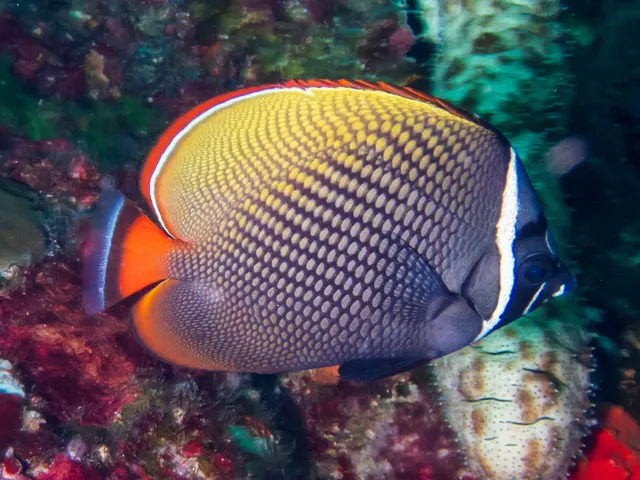
Indian vagabond butterflyfish (Chaetodon decussatus) No. 03

Indian vagabond butterflyfish

Chaetodon decussatus

A white butterflyfish with a black back half, as if it swam through a pot of ink.
Occasional
Red-tailed butterflyfish (Chaetodon collare) No. 04

Red-tailed butterflyfish

Chaetodon collare

The butterflyfish you are most likely to meet in Goa. Watch for the red tail.

Common
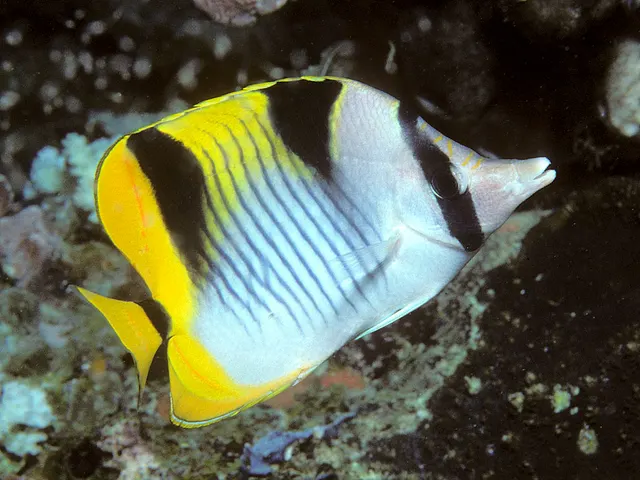
Threadfin butterflyfish (Chaetodon auriga) No. 05

Threadfin butterflyfish

Chaetodon auriga

Look for the thin thread trailing from its back fin. It is easy to miss.
Rare
Blackwedged butterflyfish (Chaetodon falcula) No. 06

Blackwedged butterflyfish

Chaetodon falcula

Two black wedges on a white back. One of the rarest butterflyfish seen in Goa.

Rare

Angelfish & damselfish

Damsels are the small, bossy fish you meet on every dive. Angelfish are the ones you will want a photo of.

7 species
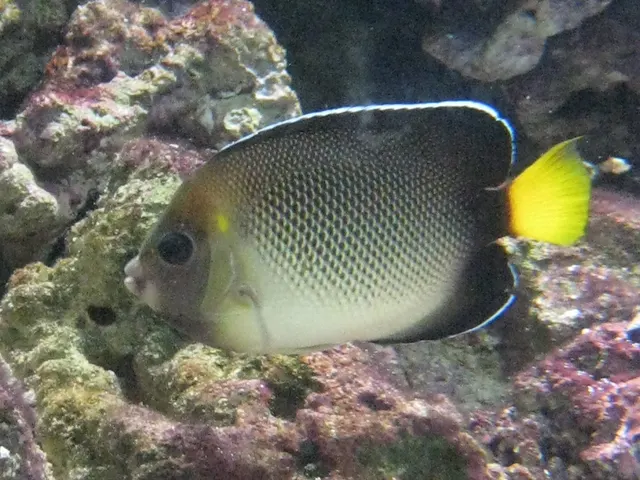
Blue-ring angelfish (Pomacanthus annularis) No. 07

Blue-ring angelfish

Pomacanthus annularis

A big orange-brown angelfish with blue lines and a blue ring behind the head.
Common
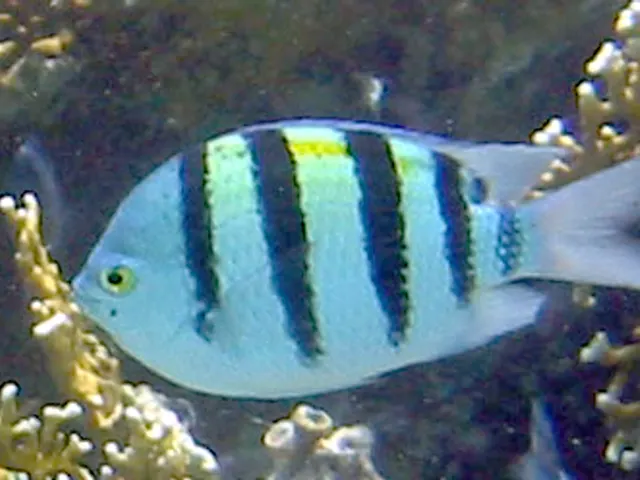
Yellowtail angelfish (Apolemichthys xanthurus) No. 08

Yellowtail angelfish

Apolemichthys xanthurus

An Indian Ocean angelfish with a net pattern and a tail that looks dipped in yellow paint.
Common
Indo-Pacific sergeant (Abudefduf vaigiensis) No. 09

Indo-Pacific sergeant

Abudefduf vaigiensis

Yellow back, black stripes, and very serious about guarding its eggs.

Common
Bengal sergeant (Abudefduf bengalensis) No. 10

Bengal sergeant

Abudefduf bengalensis

Goa's most common sergeant. Thin black stripes, no yellow, lots of attitude.

Common
Blackspot sergeant (Abudefduf sordidus) No. 11

Blackspot sergeant

Abudefduf sordidus

Rock pool regular. Find the black spot on top of the tail base.

Common
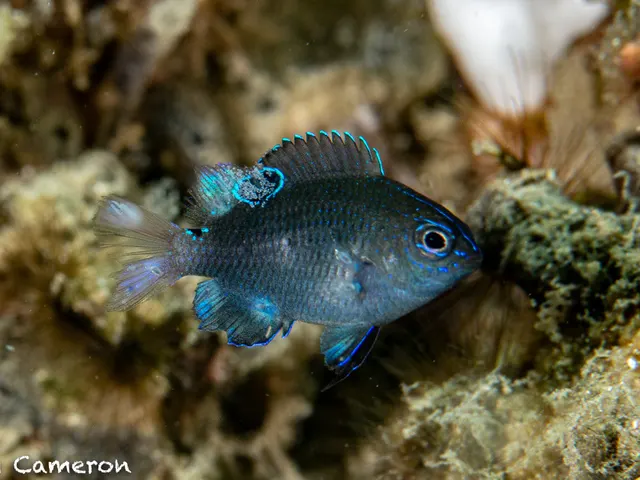
Regal demoiselle (Neopomacentrus cyanomos) No. 12

Regal demoiselle

Neopomacentrus cyanomos

Clouds of small blue damselfish hanging in the water just above the rocks.
Common
Colombo & threespot damsels (Pomacentrus proteus, P. tripunctatus) No. 13

Colombo & threespot damsels

Pomacentrus proteus, P. tripunctatus

Tiny fish, big opinions. They will chase you away from their patch of rock.

Common

Surgeonfish, parrotfish & rabbitfish

The grazers. They keep the rocks clean of algae, and on a quiet dive you can hear a parrotfish bite.
4 species
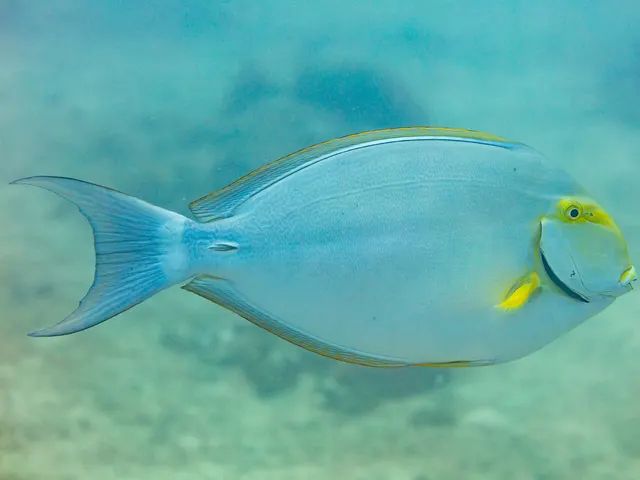
Yellowfin surgeonfish (Acanthurus xanthopterus) No. 14

Yellowfin surgeonfish

Acanthurus xanthopterus

Goa's main surgeonfish. Look for the yellow patch in front of the eye.
Common
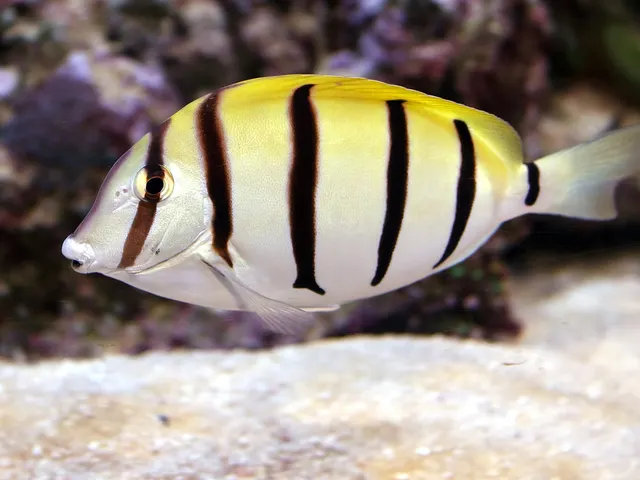
Convict surgeonfish (Acanthurus triostegus) No. 15

Convict surgeonfish

Acanthurus triostegus

Black stripes like an old prison uniform. Moves in gangs that raid the algae.
Rare
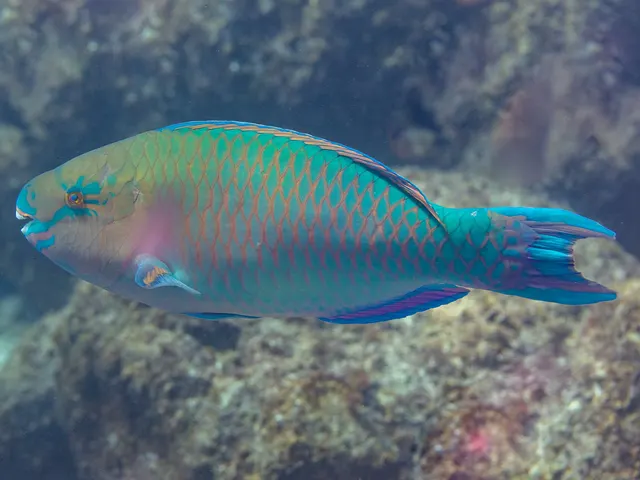
Blue-barred parrotfish (Scarus ghobban) No. 16

Blue-barred parrotfish

Scarus ghobban

It eats rock and makes sand. You can sometimes hear it crunching.
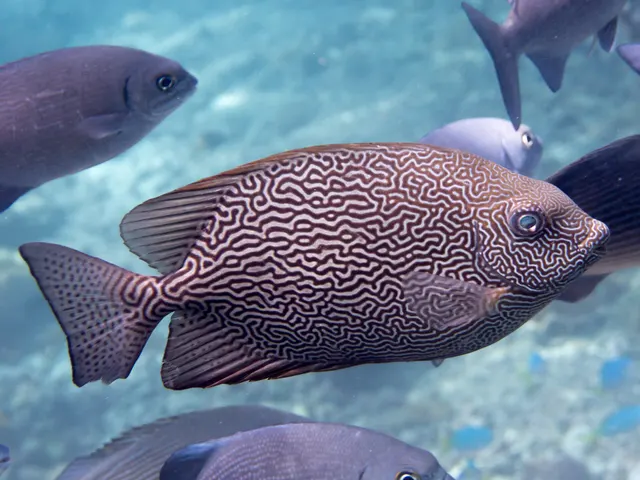
Occasional
Rabbitfish (Siganus vermiculatus, S. javus) No. 17

Rabbitfish

Siganus vermiculatus, S. javus

Soft rabbit face, sharp venomous spines. Look, do not touch.

Occasional

Groupers, snappers & sweetlips

Bigger reef fish that like wrecks and ledges. Suzy's Wreck is the best place to find them.
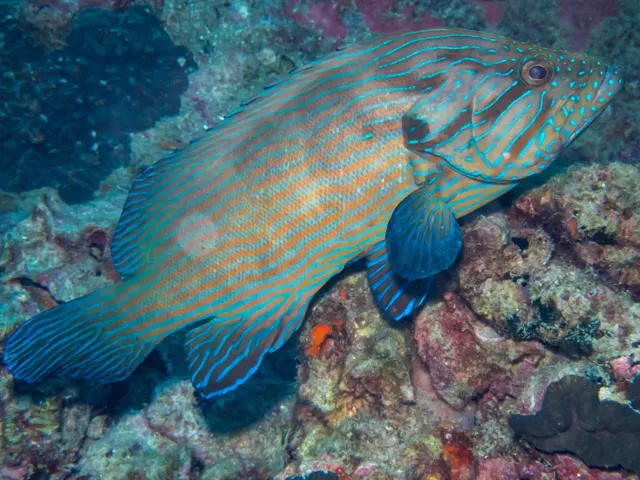
7 species
Bluelined rockcod (Cephalopholis formosa) No. 18

Bluelined rockcod

Cephalopholis formosa

Goa's most common small grouper. Brown with electric blue lines.
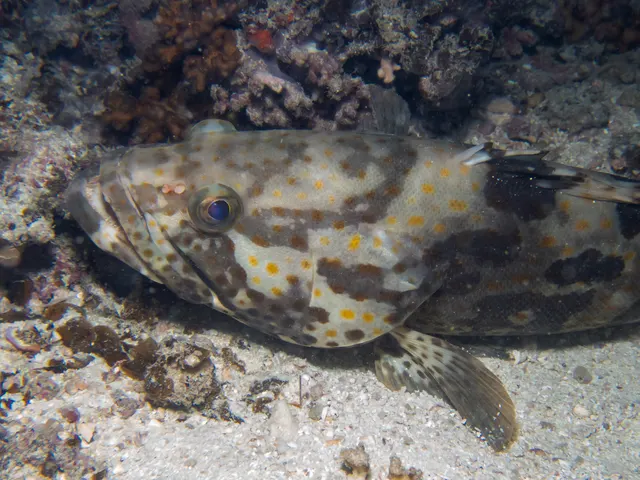
Common
Orange-spotted grouper (Epinephelus coioides) No. 19

Orange-spotted grouper

Epinephelus coioides

A big brown grouper covered in orange spots. Some here are bigger than you expect.
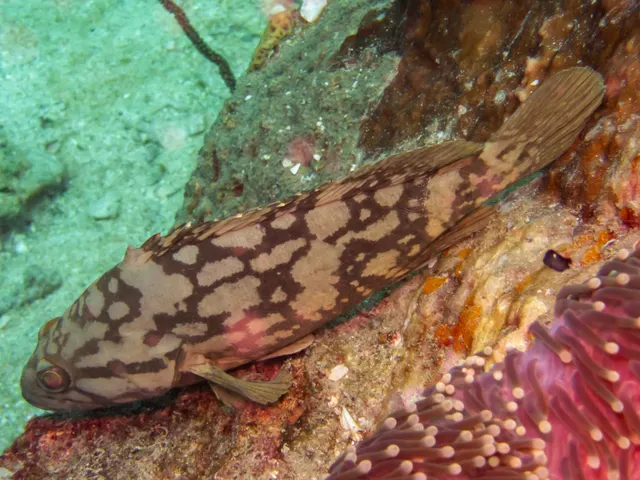
Common
Cloudy grouper (Epinephelus erythrurus) No. 20

Cloudy grouper

Epinephelus erythrurus

A mottled brown grouper that likes murky water. It feels at home in Goa.

Occasional
Mangrove red snapper (Lutjanus argentimaculatus) No. 21

Mangrove red snapper

Lutjanus argentimaculatus

Goa's red snapper. It grows up in the mangroves, then moves out to the reefs and wrecks.

Common
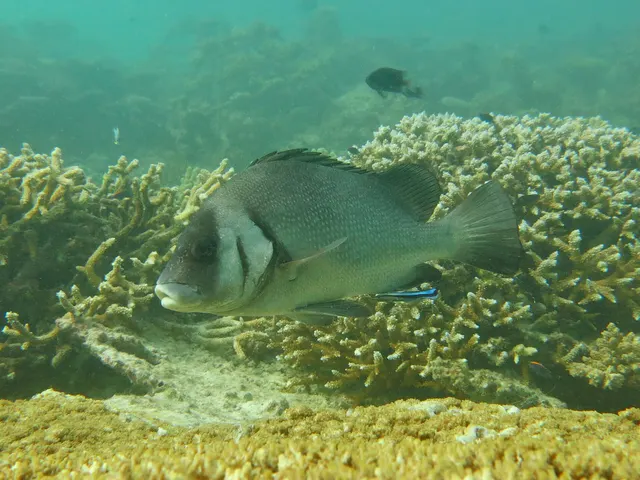
Speckled & blacktail snappers (Lutjanus rivulatus, L. fulvus) No. 22

Speckled & blacktail snappers

Lutjanus rivulatus, L. fulvus

Groups of snapper hanging in the current at Suzy's Wreck. A classic Goa scene.
Common
Sweetlips (Plectorhinchus gibbosus, P. schotaf, P. chubbi) No. 23

Sweetlips

Plectorhinchus gibbosus, P. schotaf, P. chubbi

Big fish with thick, soft lips, resting under ledges like they own the place.

Occasional
Whitecheek monocle bream (Scolopsis vosmeri) No. 24

Whitecheek monocle bream

Scolopsis vosmeri

Look for the white bar across the cheek. One of the most recorded fish in Goa.

Common

Open-water hunters

Fast fish that patrol the edge of the reef. They come and go, so each sighting is a bit of luck.
6 species
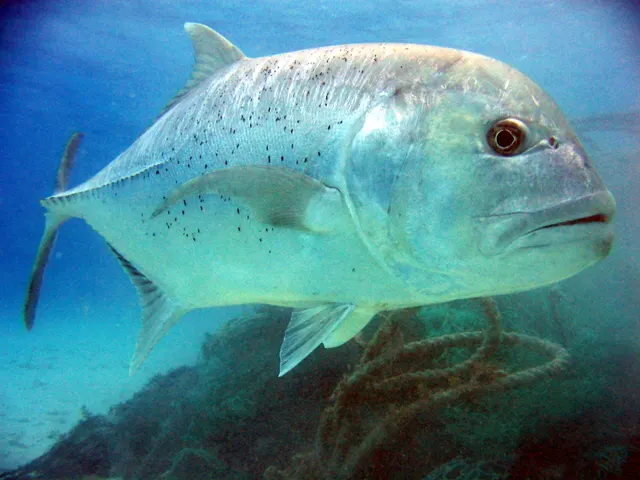
Giant trevally (Caranx ignobilis) No. 25

Giant trevally

Caranx ignobilis

A heavy silver hunter that turns up on the deeper sites when the current runs
Occasional
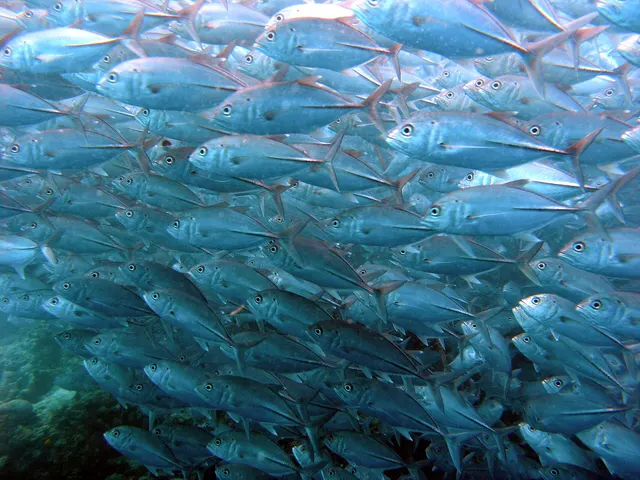
Bigeye trevally (Caranx sexfasciatus) No. 26

Bigeye trevally

Caranx sexfasciatus

Silver jacks that sometimes circle divers in a slow, shining school

Occasional
Great barracuda (Sphyraena barracuda) No. 27

Great barracuda

Sphyraena barracuda

Big teeth, a cold stare, and no interest at all in eating you
Occasional
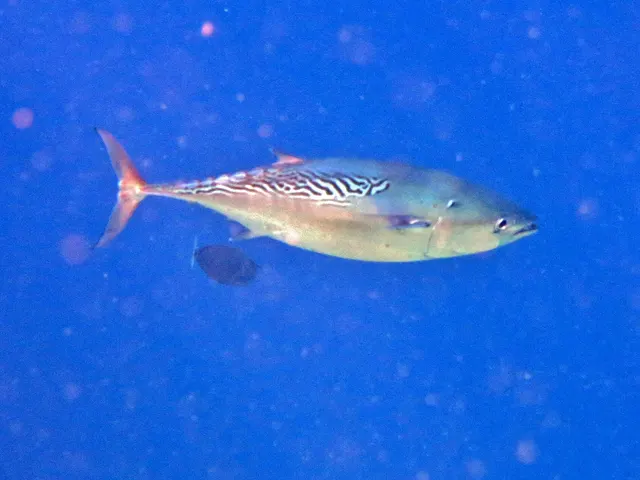
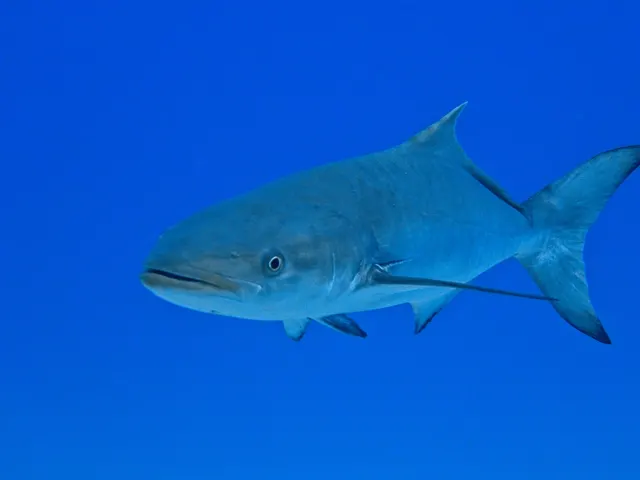
Kawakawa (mackerel tuna) (Euthynnus affinis) No. 28

Kawakawa (mackerel tuna)

Euthynnus affinis

A small tuna that races past the reef. Look away and you miss it
Occasional
Cobia (Rachycentron canadum) No. 29

Cobia

Rachycentron canadum

At first glance it looks like a small shark. Look again

Rare
Fusiliers (Caesio cuning, C. caerulaurea) No. 30

Fusiliers

Caesio cuning, C. caerulaurea

Blue and yellow schools that stream past in midwater above the reef

Occasional

Triggerfish, puffers & boxfish

Odd shapes and strong teeth. Most of them swim slowly, so you can stay and watch for a while.
7 species
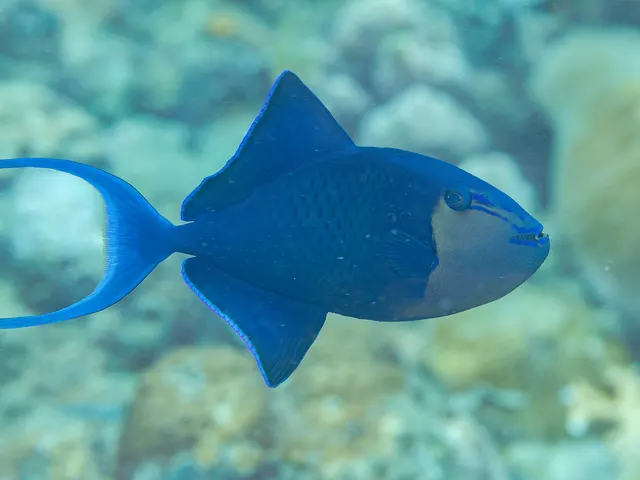
Redtooth triggerfish (Odonus niger) No. 31

Redtooth triggerfish

Odonus niger

Dark blue, a tail like a lyre, and yes, the teeth really are red
Common
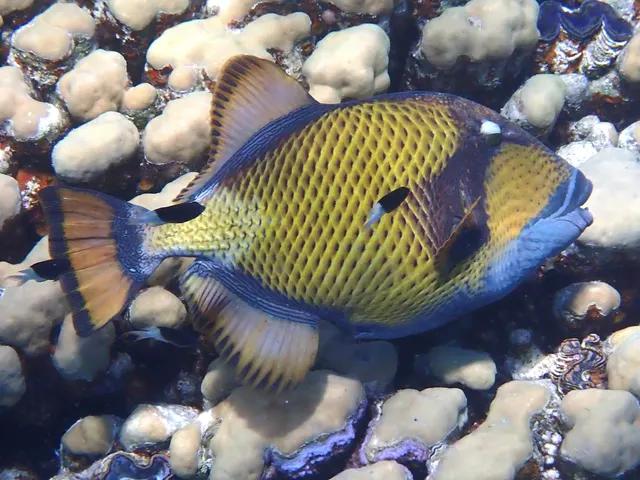
Titan triggerfish (Balistoides viridescens) No. 32

Titan triggerfish

Balistoides viridescens

The biggest triggerfish on the reef, and the one with the worst temper
Rare
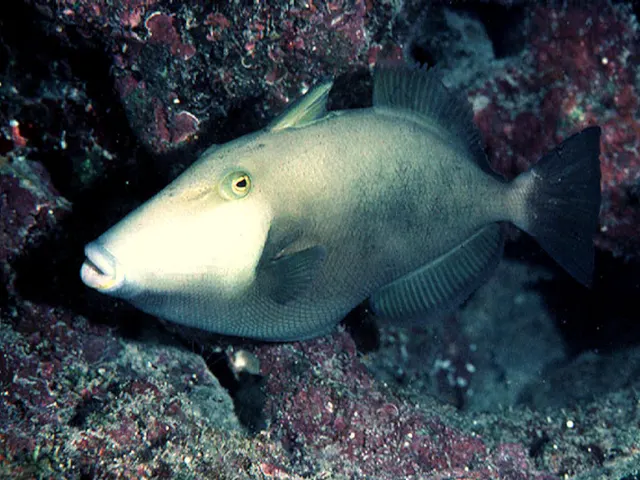
Bridled triggerfish (Sufflamen fraenatum) No. 33

Bridled triggerfish

Sufflamen fraenatum

A quiet brown triggerfish with a pale line under its chin, like a bridle
Occasional
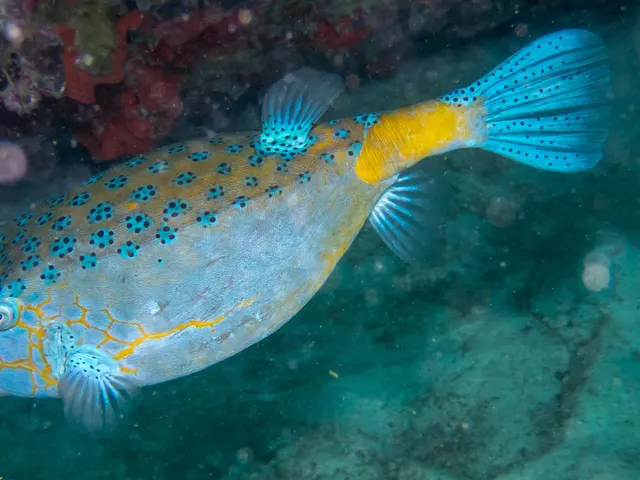
Yellow boxfish (Ostracion cubicum) No. 34

Yellow boxfish

Ostracion cubicum

A tiny yellow box with black spots and fins that buzz like propellers

Rare
Longhorn cowfish (Lactoria cornuta) No. 35

Longhorn cowfish

Lactoria cornuta

A fish with horns on its head, a box for a body and a tiny pouting mouth
Occasional
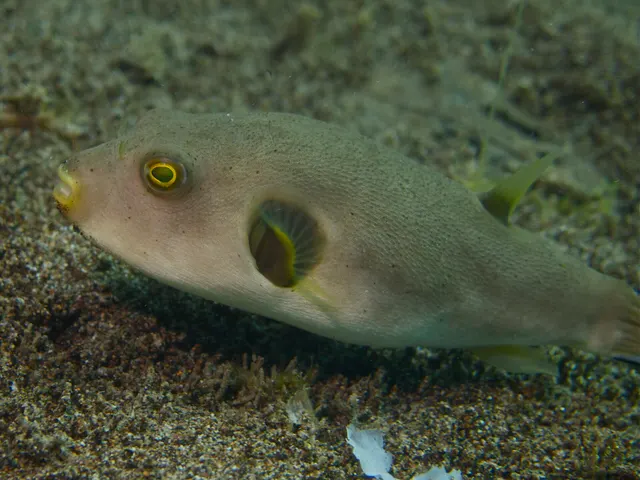
Pufferfish (Arothron immaculatus) No. 36

Pufferfish

Arothron immaculatus

Big eyes, slow fins and a face that always seems to be smiling
Occasional
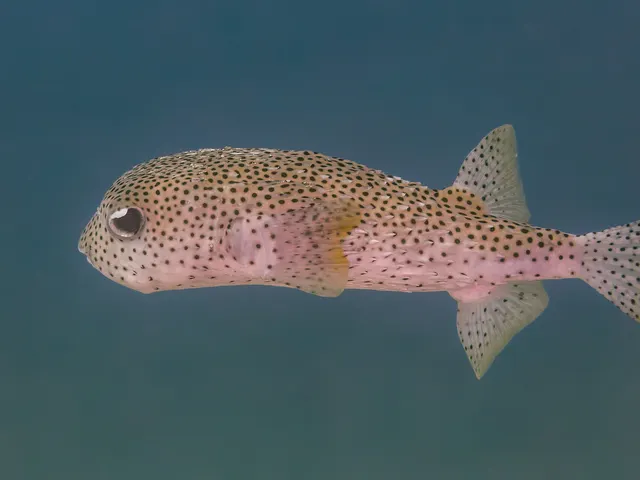
Spot-fin porcupinefish (Diodon hystrix) No. 37

Spot-fin porcupinefish

Diodon hystrix

Big sad eyes by day, a ball of spines when it gets scared

Common

Lionfish, scorpionfish & goatfish

Look closely at the rocks. Some of these fish are venomous, and some are almost invisible.
4 species
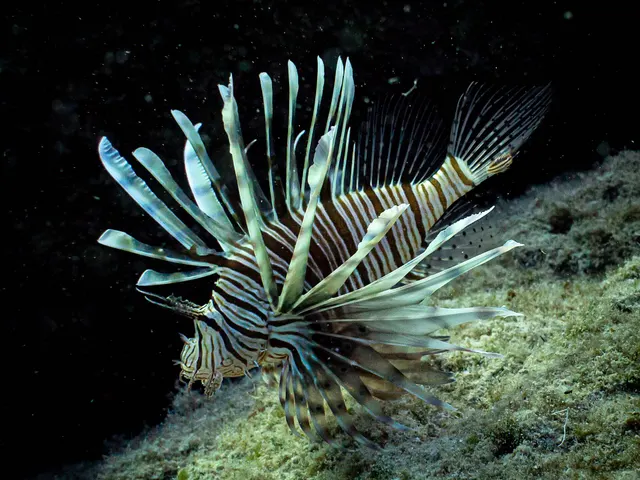
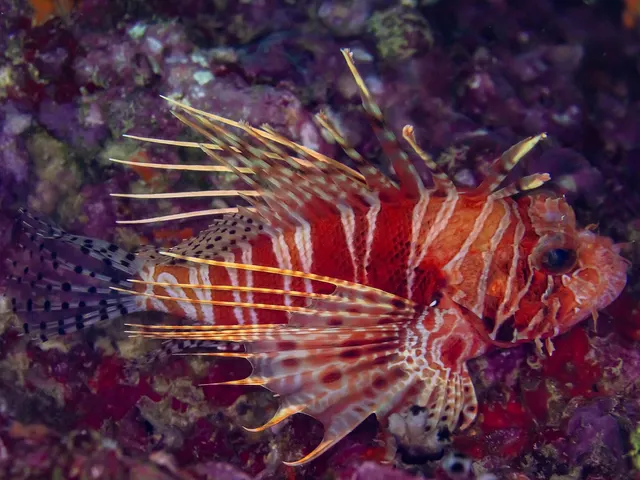
Devil firefish (Indian lionfish) (Pterois miles) No. 38

Devil firefish (Indian lionfish)

Pterois miles

Goa's lionfish: slow, beautiful, and carrying venom in its spines
Common
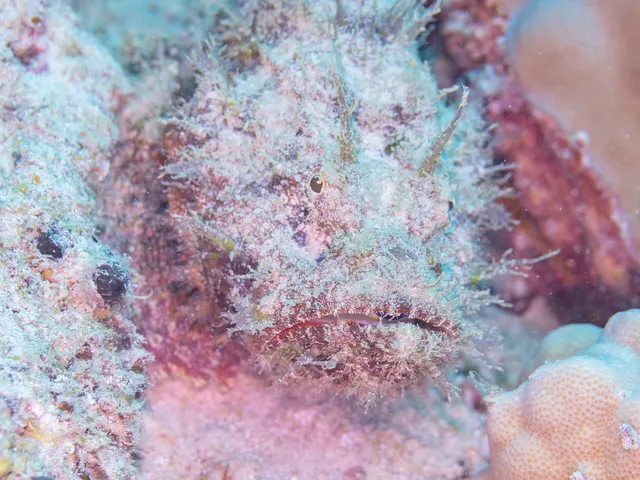
Mombasa lionfish (Pteropterus mombasae) No. 39

Mombasa lionfish

Pteropterus mombasae

A smaller, shyer lionfish that keeps to the deeper, quieter corners
Rare
Devil scorpionfish (Scorpaenopsis diabolus) No. 40

Devil scorpionfish

Scorpaenopsis diabolus

It looks like a rock with lips, until it flashes bright orange at you
Rare
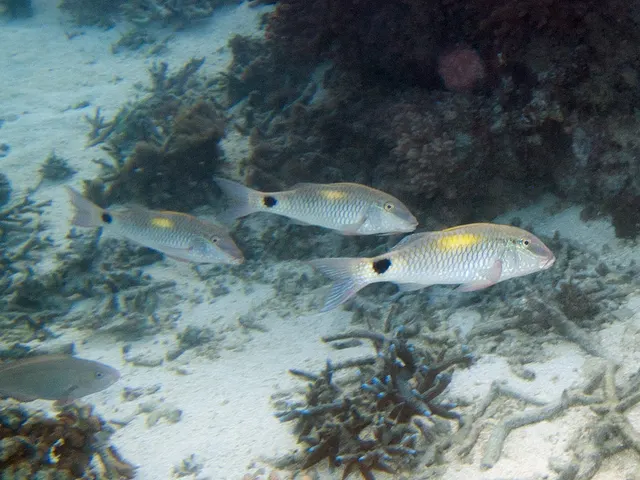
Indian goatfish (Parupeneus indicus) No. 41

Indian goatfish

Parupeneus indicus

It digs in the sand with its chin whiskers, and other fish follow it around

Occasional

Wrasses, blennies & small reef fish

Small fish that most divers swim straight past. Slow down near the bottom and you will find most of them.
9 species
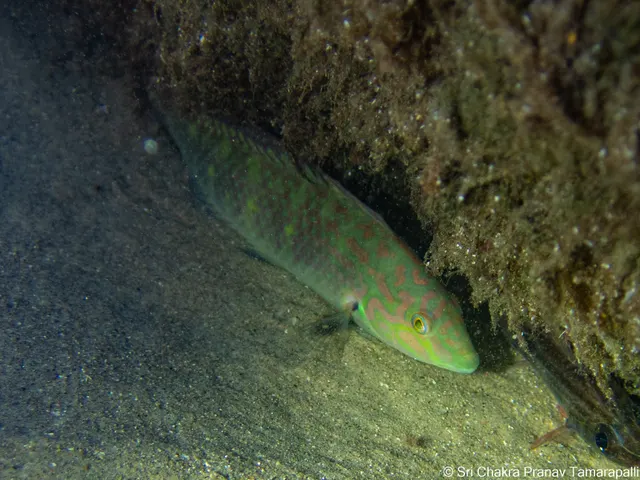
Bubblefin wrasse (Halichoeres nigrescens) No. 42

Bubblefin wrasse

Halichoeres nigrescens

A small, busy reef wrasse that never seems to stop moving
Common
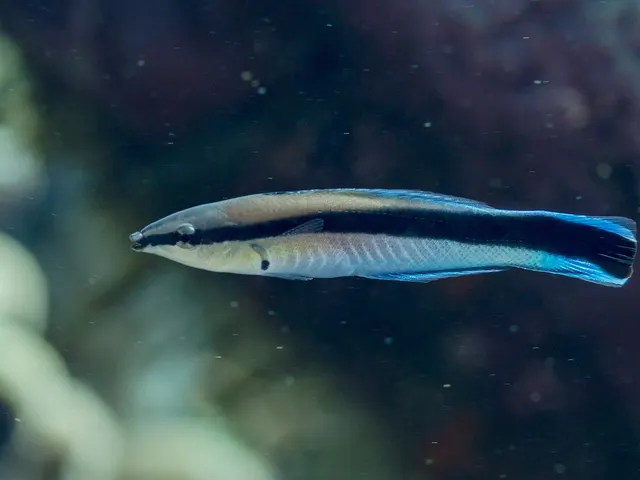
Bluestreak cleaner wrasse (Labroides dimidiatus) No. 43

Bluestreak cleaner wrasse

Labroides dimidiatus

The reef's doctor. Bigger fish line up and wait their turn for a clean
Occasional
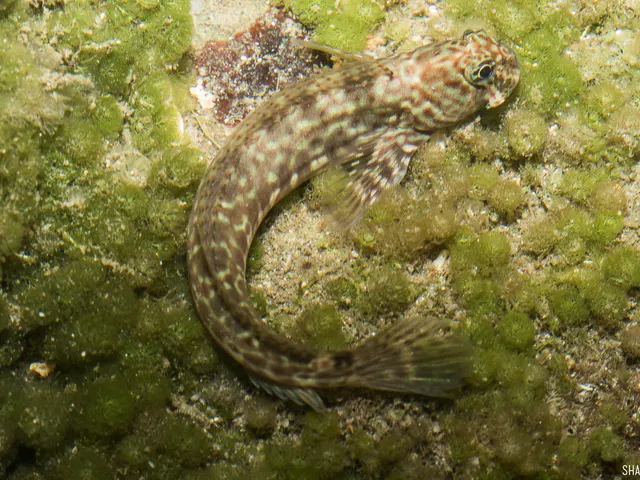
Dussumier's rockskipper (Istiblennius dussumieri) No. 44

Dussumier's rockskipper

Istiblennius dussumieri

The fish that hops between rock pools and seems happy out of the water
Common
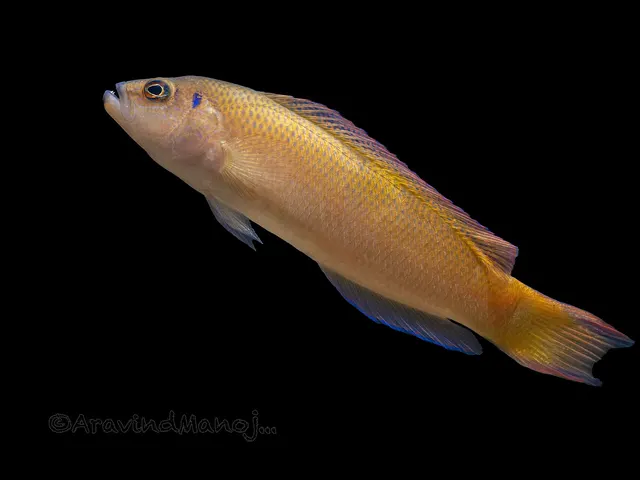
Stripe-tailed dottyback (Pseudochromis caudalis) No. 45

Stripe-tailed dottyback

Pseudochromis caudalis

A small, shy fish that peeks out of rock cracks, then hides again

Occasional
Red squirrelfish (Sargocentron rubrum) No. 46

Red squirrelfish

Sargocentron rubrum

Big eyes, red stripes and a sharp spine. A fish made for the night
Rare
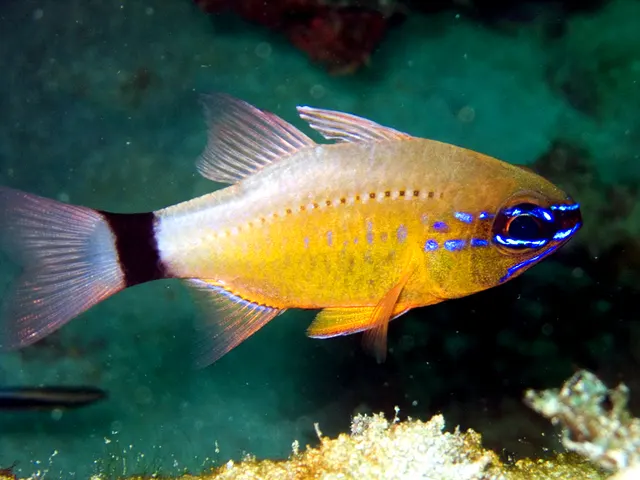
Cardinalfish (Apogonidae (several species)) No. 47

Cardinalfish

Apogonidae (several species)

Small fish that hang still in wreck holes, where the dads carry the eggs in their mouths
Occasional
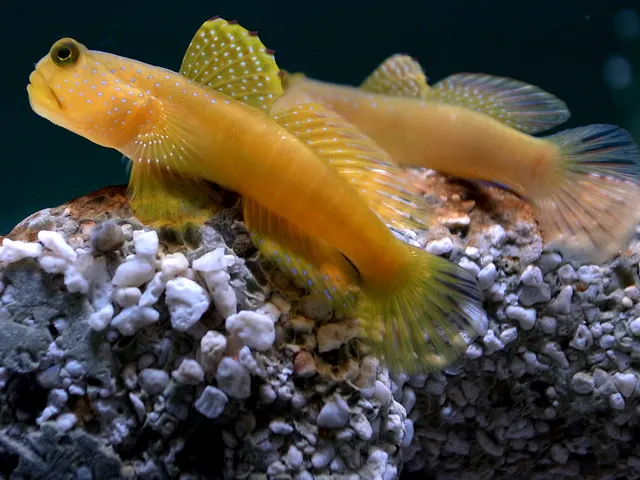
Shrimpgoby & pistol shrimp (Cryptocentrus cyanotaenia & Alpheus sp.) No. 48

Shrimpgoby & pistol shrimp

Cryptocentrus cyanotaenia & Alpheus sp.

A team on the sand: the goby keeps watch while the shrimp does the digging
Common
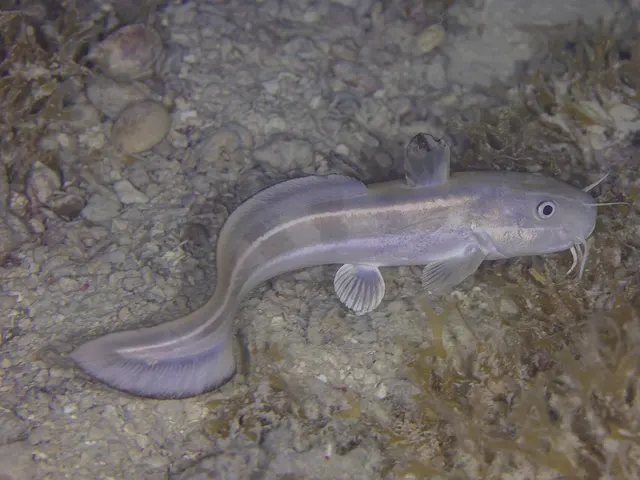
Striped eel catfish (Plotosus lineatus) No. 49

Striped eel catfish

Plotosus lineatus

Young catfish roll across the sand together in a tight ball of a hundred or so
Occasional
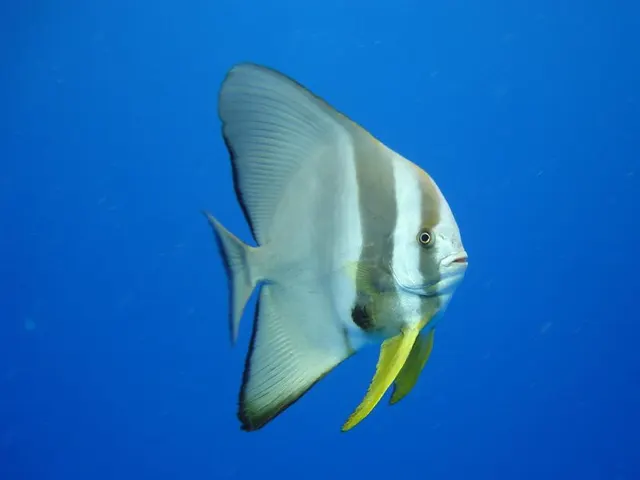
Batfish (Platax teira) No. 50

Batfish

Platax teira

Tall, round, flat fish that swim up to divers to see what they are

Occasional

Seahorses & pipefish

Rare and very hard to spot. Ask your instructor to look for them with you.

2 species
Spotted seahorse (Hippocampus kuda) No. 51 VU

Spotted seahorse

Hippocampus kuda

Rare, small and very easy to miss. Finding one is a real event
Rare
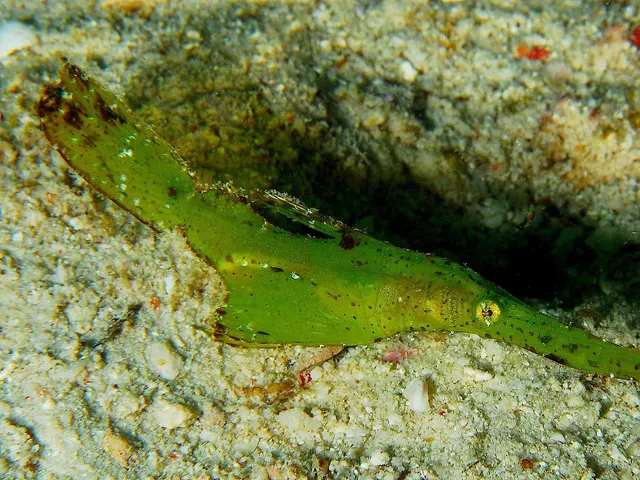
Robust ghost pipefish (Solenostomus cyanopterus) No. 52

Robust ghost pipefish

Solenostomus cyanopterus

A fish that looks exactly like a piece of drifting seagrass

Rare

Moray eels

Goa's rocky reefs are full of cracks, and the cracks are full of morays.

3 species
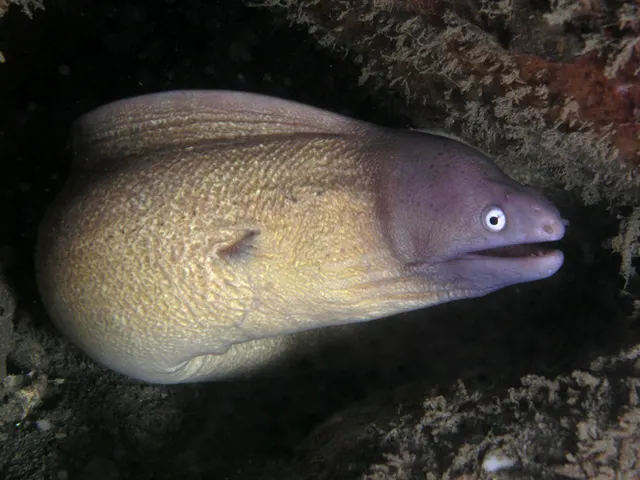
Honeycomb moray (Gymnothorax favagineus) No. 53

Honeycomb moray

Gymnothorax favagineus

A big spotted eel with its mouth open. It is breathing, not threatening you
Common
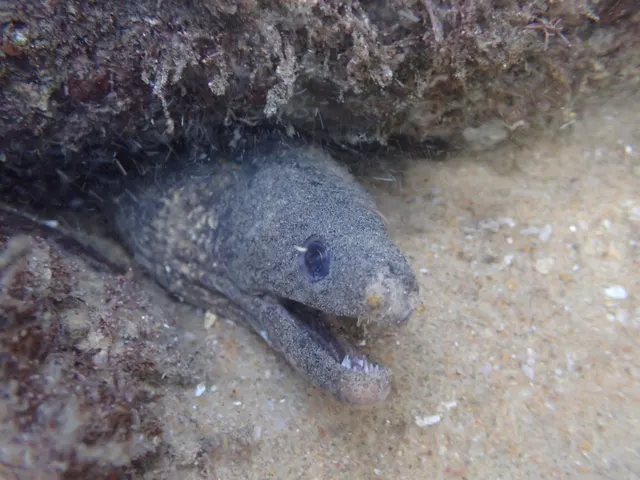
White-eyed moray (Gymnothorax thyrsoideus) No. 54

White-eyed moray

Gymnothorax thyrsoideus

A moray with pale eyes that often shares its hole with friends
Occasional
Highfin moray (Gymnothorax pseudothyrsoideus) No. 55

Highfin moray

Gymnothorax pseudothyrsoideus

A brown moray that even experienced divers mix up with its white-eyed cousin

Common

Sharks and rays in Goa

No big sharks here. Rays on the sand are the regular sighting. Everything else is rare luck.
4 species
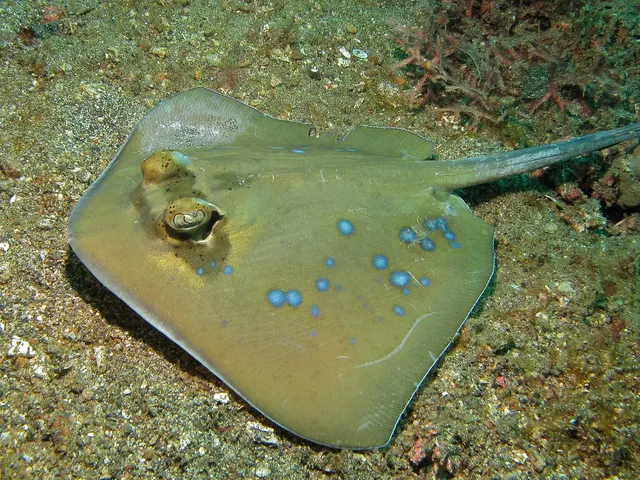
Indian Ocean blue-spotted maskray (Neotrygon indica) No. 56

Indian Ocean blue-spotted maskray

Neotrygon indica

Two eyes and a blue-spotted edge poking out of the sand. That's your ray.
Occasional
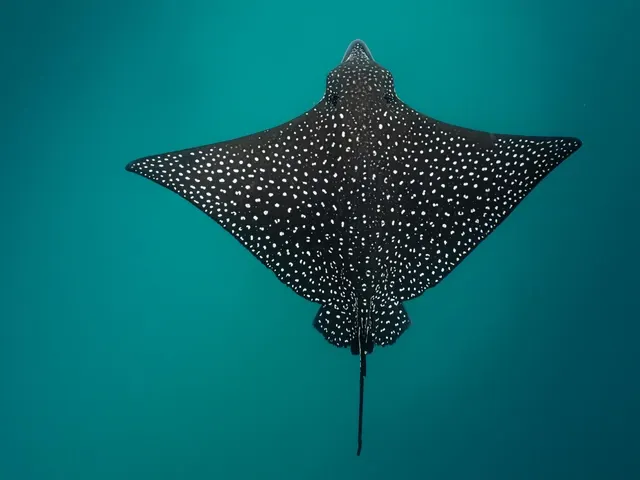
Longheaded eagle ray (Aetobatus flagellum) No. 57 EN

Longheaded eagle ray

Aetobatus flagellum

A rare eagle ray with a long duck-bill nose that flies low over the sand

Rare
Grey bamboo shark (Chiloscyllium griseum) No. 58 VU

Grey bamboo shark

Chiloscyllium griseum

A small, quiet shark that sleeps under rock ledges during the day
Rare
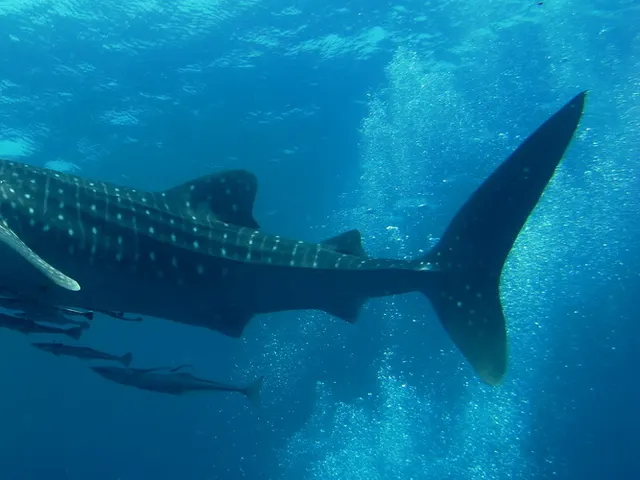
Whale shark (Rhincodon typus) No. 59 EN

Whale shark

Rhincodon typus

The biggest fish in the sea. In Goa, a once-in-many-years surprise

Rare

Turtles, dolphins and sea snakes in Goa

The air-breathers. You will probably see dolphins from the boat. Turtles are rare underwater, but four Goa beaches are nesting sites.
5 species
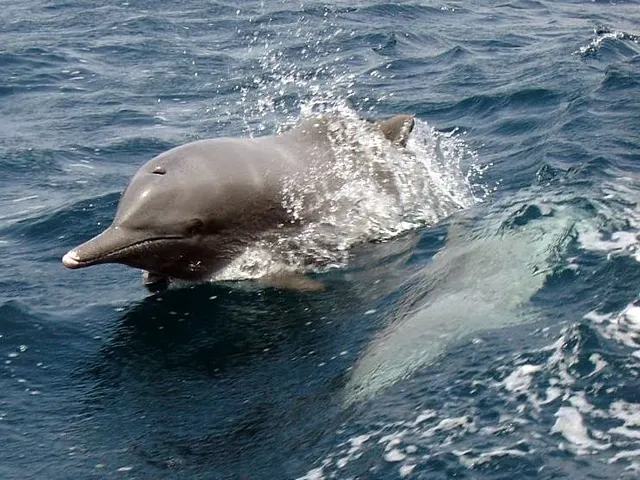
Indian Ocean humpback dolphin (Sousa plumbea) No. 60 EN

Indian Ocean humpback dolphin

Sousa plumbea

Coastal dolphins with a hump on the back, often near Aguada and the river mouths
Common
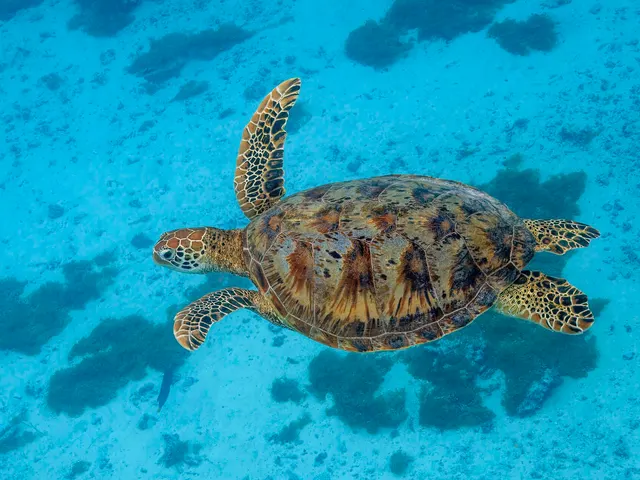
Green turtle (Chelonia mydas) No. 61

Green turtle

Chelonia mydas

A rare grazing turtle that visits Goa's reefs to feed, then moves on
Rare
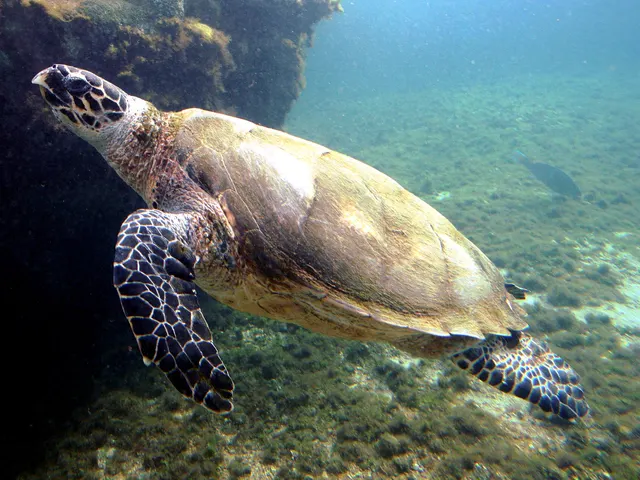
Hawksbill turtle (Eretmochelys imbricata) No. 62 CR

Hawksbill turtle

Eretmochelys imbricata

A sharp, hawk-like beak made for pulling sponges out of the reef

Rare
Olive ridley turtle (Lepidochelys olivacea) No. 63 VU

Olive ridley turtle

Lepidochelys olivacea

Goa's own nesting turtle. Females come ashore at night, mostly on four protected beaches

Seasonal
Sea snakes (Hydrophis schistosus, H. curtus, H. platurus) No. 64

Sea snakes

Hydrophis schistosus, H. curtus, H. platurus

Air-breathing snakes with paddle tails. Highly venomous, but rarely interested in you

Occasional

Octopus, cuttlefish & squid

Watch one for a minute and it will change colour more than once.
4 species
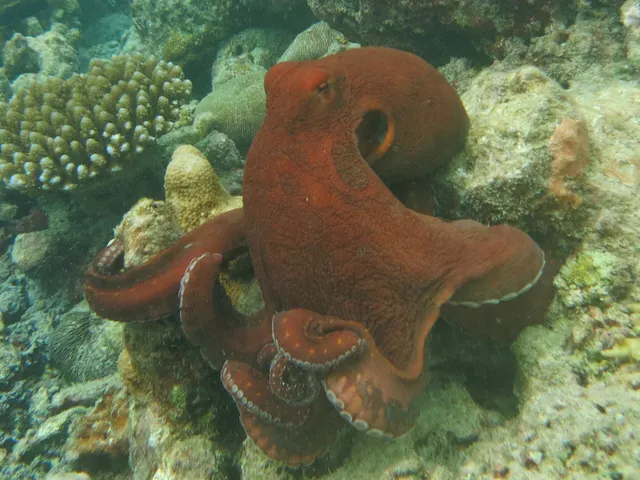
Octopus (Octopus sp.) No. 65

Octopus

Octopus sp.

Changes colour and skin texture in a second. Look for empty shells at its door
Occasional
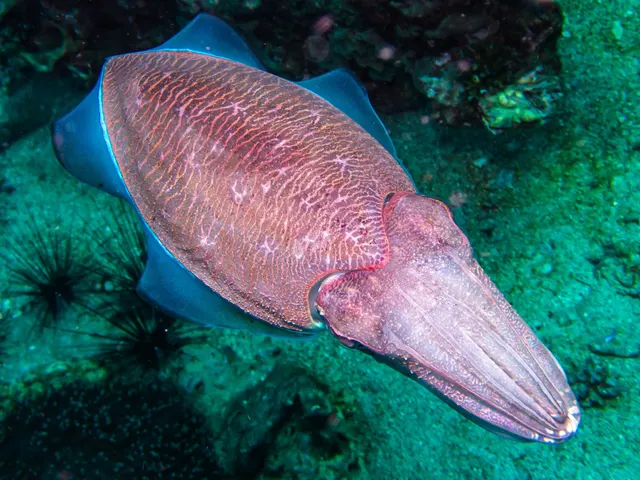
Pharaoh cuttlefish (Acanthosepion pharaonis) No. 66

Pharaoh cuttlefish

Acanthosepion pharaonis

Changes colour in a blink, then shoots out two tentacles to grab dinner
Occasional
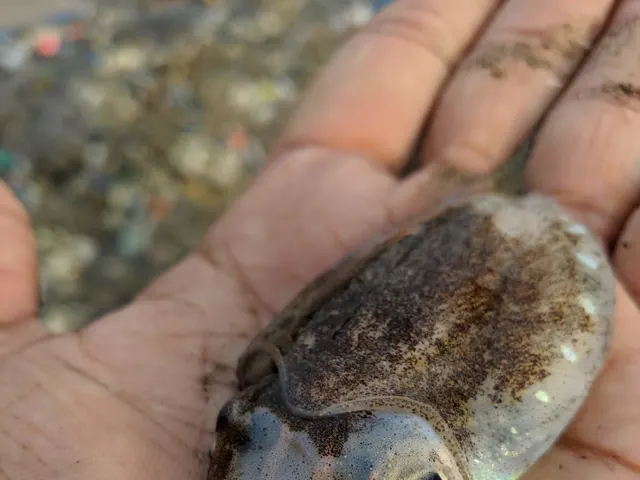
Spineless cuttlefish (Sepiella inermis) No. 67

Spineless cuttlefish

Sepiella inermis

A small, shy cuttlefish that stays in shallow water close to shore
Occasional
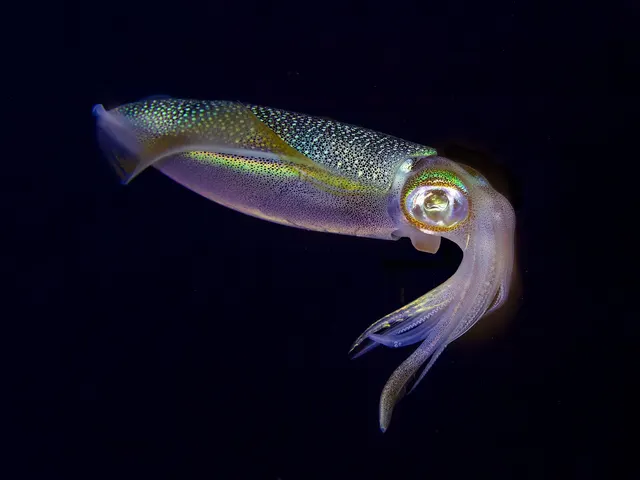
Bigfin reef squid (Sepioteuthis lessoniana) No. 68

Bigfin reef squid

Sepioteuthis lessoniana

Squid that hover in small groups and flicker with colour while you watch

Rare

Nudibranchs

Sea slugs the size of a fingernail, in colours that look painted on. Dozens of species are recorded in Goa.
5 species
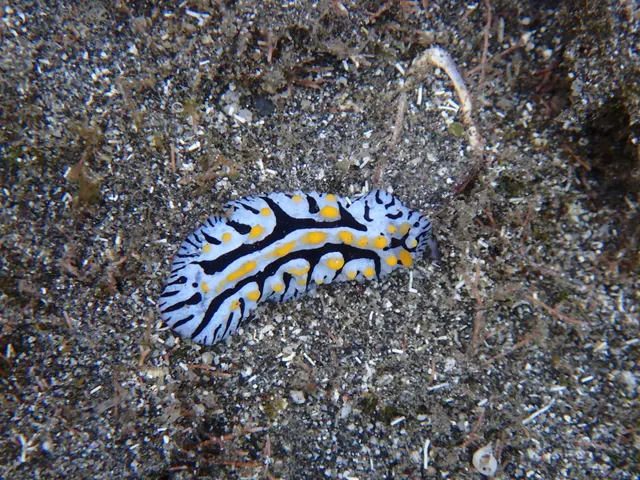
Nautical phyllidia (Phyllidia marindica) No. 69

Nautical phyllidia

Phyllidia marindica

A slow, lumpy sea slug with yellow-tipped warts that fish have learned to leave alone.
Occasional
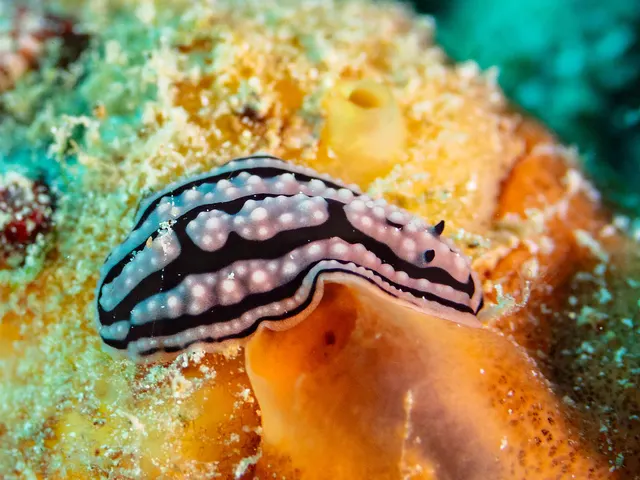
Domino nudibranch (Phyllidiella zeylanica) No. 70

Domino nudibranch

Phyllidiella zeylanica

Pink bumpy ridges on a black body. The rarer cousin of the yellow phyllidia.

Rare
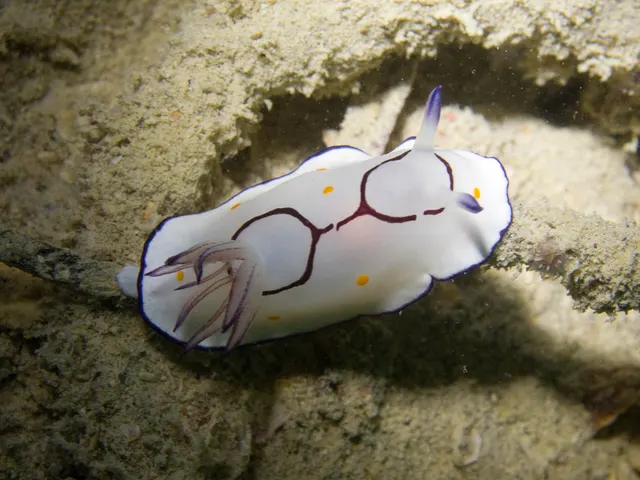
Scribbled nudibranch (Doriopsilla miniata) No. 71

Scribbled nudibranch

Doriopsilla miniata

A little orange slug that looks like someone drew on it with a white pen.
Common
Ringed chromodorid (Goniobranchus annulatus) No. 72

Ringed chromodorid

Goniobranchus annulatus

A pale sea slug with bold purple rings around its horns and gills.

Rare
Bombay dorid (Goniobranchus bombayanus) No. 73

Bombay dorid

Goniobranchus bombayanus

A tiny sea slug named after Mumbai, and one of the rare finds on this coast.

Rare

Crabs, lobsters, urchins & sea stars

Look in cracks for lobsters, and in rock pools for crabs, urchins and sea cucumbers.

9 species
Painted spiny lobster (Panulirus versicolor) No. 74

Painted spiny lobster

Panulirus versicolor

Look for two long white antennae sticking out of a crack. There is a lobster behind them.

Rare
Mottled lightfoot crab (Grapsus albolineatus) No. 75

Mottled lightfoot crab

Grapsus albolineatus

The fastest crab on Goa's rocks. Blink and it is already on the other side.

Common
Red egg crab (Atergatis integerrimus) No. 76

Red egg crab

Atergatis integerrimus

A smooth red crab that looks good enough to eat. Crabs in its family can be deadly.

Occasional
White-spotted hermit crab (Dardanus megistos) No. 77

White-spotted hermit crab

Dardanus megistos

A big red hermit crab with white spots, dragging its borrowed shell over the sand.

Rare
Spider decorator crab (Camposcia retusa) No. 78

Spider decorator crab

Camposcia retusa

A crab that sticks sponge and seaweed on its own back to disappear.
Rare
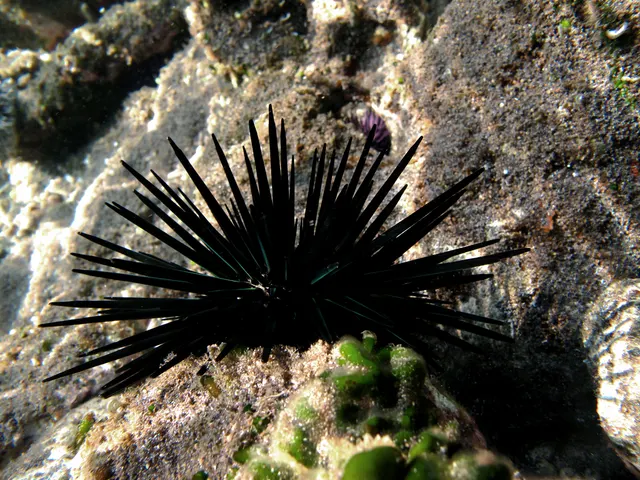
Pot-hole sea urchin (Stomopneustes variolaris) No. 79

Pot-hole sea urchin

Stomopneustes variolaris

A black spiny urchin that digs its own home into solid rock.
Common
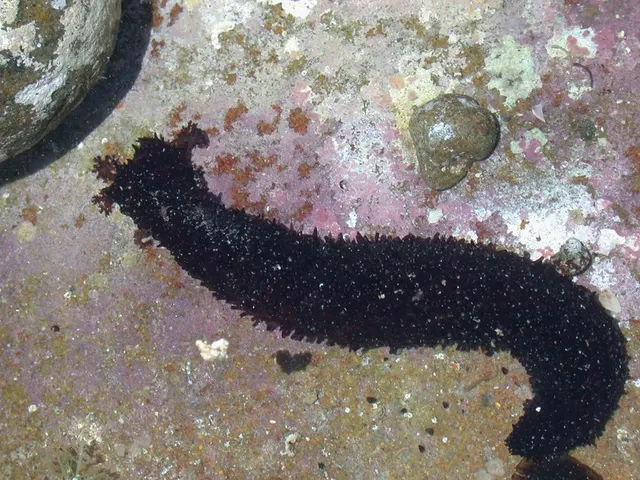
Black sea cucumber (Holothuria leucospilota) No. 80

Black sea cucumber

Holothuria leucospilota

Squeeze it and it shoots sticky white threads at you. So don't.
Common
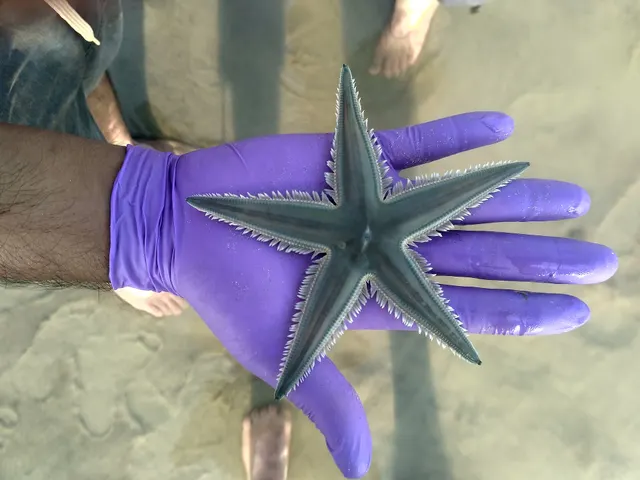
Plain sand star (Astropecten indicus) No. 81

Plain sand star

Astropecten indicus

A starfish that buries itself in the sand faster than you can find it.
Common
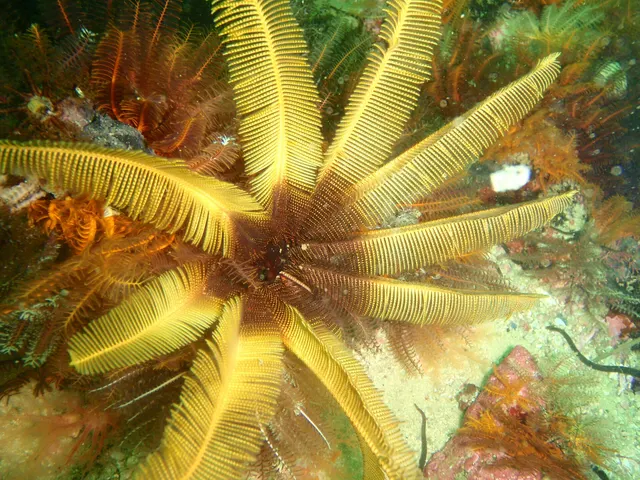
Elegant feather star (Tropiometra carinata) No. 82

Elegant feather star

Tropiometra carinata

Ten feathery arms on a rock. When it lets go, it swims.

Rare

Corals, anemones and sponges in Goa

Goa's reefs are rocky, not coral reefs. Corals, sponges and anemones still grow on the rocks, and two of the anemones were first described from Goa.
9 species
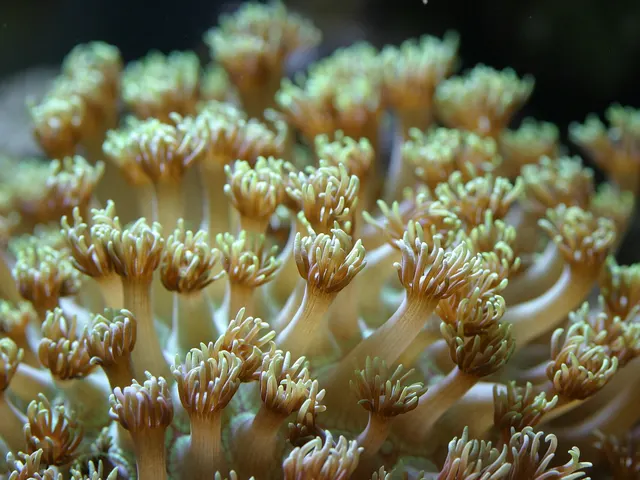
Flowerpot coral (Goniopora spp.) No. 83

Flowerpot coral

Goniopora spp.

A hard coral that looks like a pot of flowers, its long polyps swaying all day.

Occasional
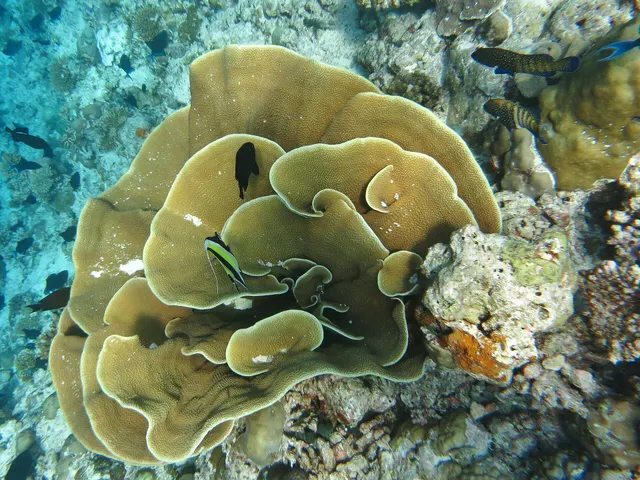
Pentagonal honeycomb coral (Favites pentagona) No. 84

Pentagonal honeycomb coral

Favites pentagona

A coral boulder that looks like a honeycomb. Common on the reefs around Grande Island.
Common
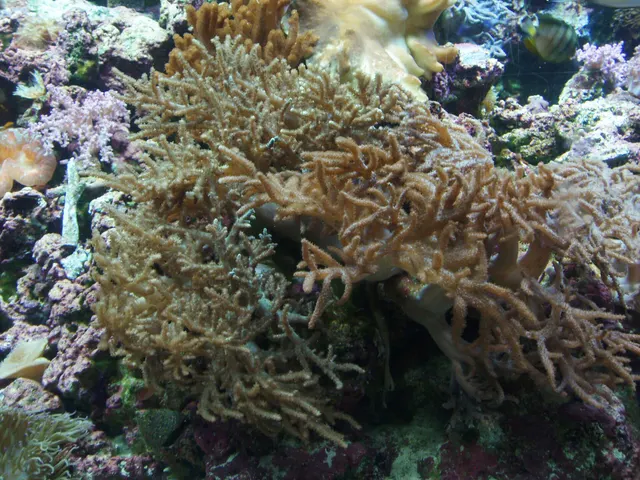
Salad coral (Turbinaria mesenterina) No. 85

Salad coral

Turbinaria mesenterina

Folded coral plates that look like a bowl of lettuce. Handles Goa's murky water well.
Occasional
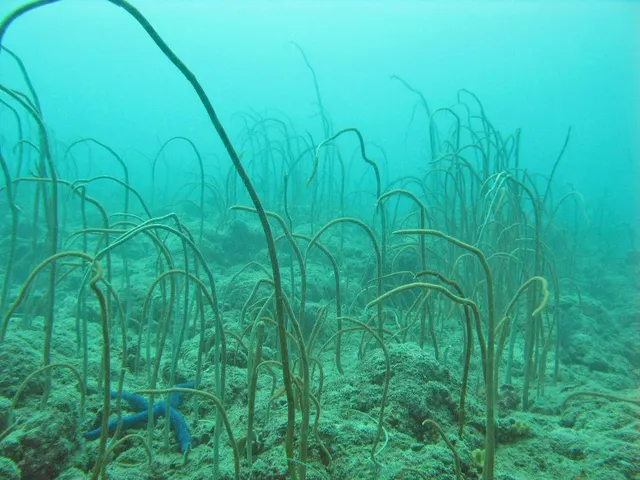
Leather coral (Sinularia brassica) No. 86

Leather coral

Sinularia brassica

A soft coral that feels like leather and folds like a cabbage. Look, don't touch.
Occasional
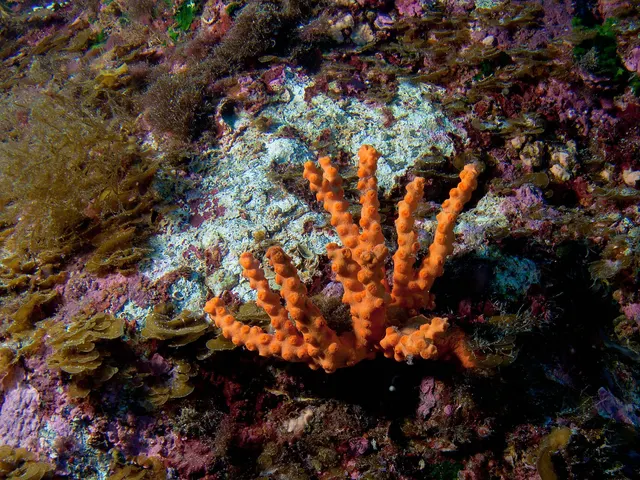
Sea whips (Junceella juncea) No. 87

Sea whips

Junceella juncea

Long coral whips sticking out from the rock, often next to bright orange sponges.
Occasional
Cup corals (Dendrophyllia spp.) No. 88

Cup corals

Dendrophyllia spp.

Bright orange-yellow coral cups hiding under overhangs. Bring a torch.
Occasional
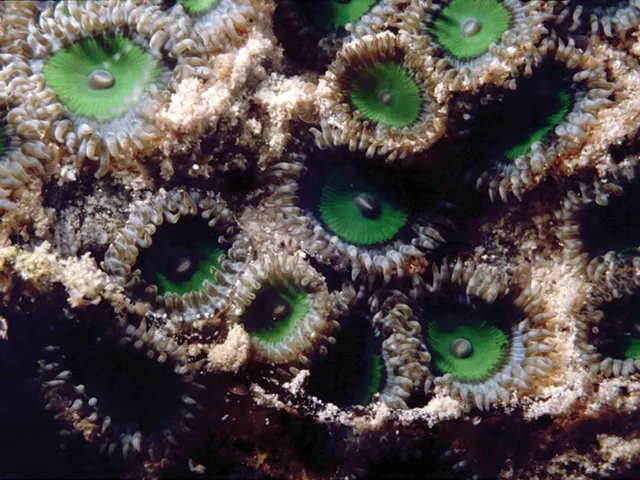
Zoanthids (Zoanthus sansibaricus, Palythoa mutuki) No. 89

Zoanthids

Zoanthus sansibaricus, Palythoa mutuki

Green and brown button polyps that carpet Goa's rocky shore. Pretty, and toxic.
Common
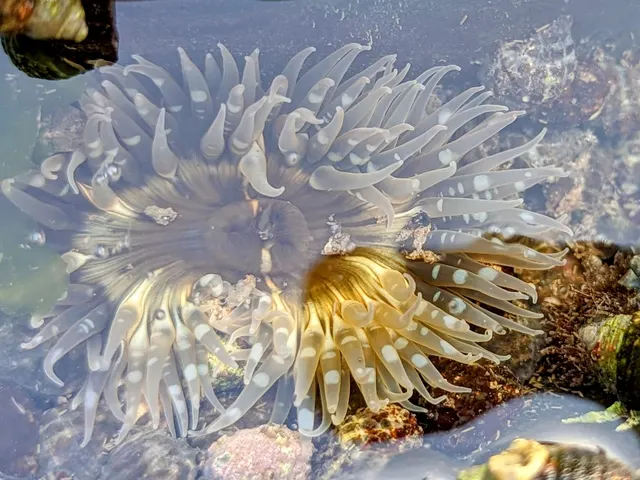
Goa's own sea anemones (Anthopleura anjunae, Bunodosoma goanense) No. 90

Goa's own sea anemones

Anthopleura anjunae, Bunodosoma goanense

Two sea anemones found and named in Goa. One is named after Anjuna beach.
Common
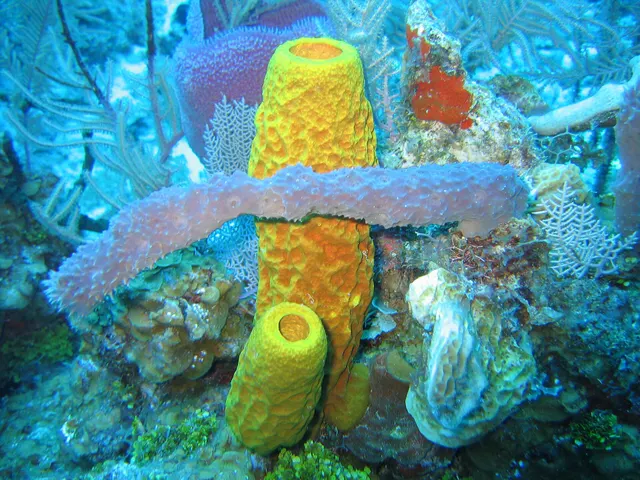
Sponges (Porifera (several species)) No. 91

Sponges

Porifera (several species)

Orange sponges, grey sponges, sponge crusts. They feed every sea slug on this page.

Common

Jellyfish in Goa and other drifters

What floats in the water and washes up on the beach, and which ones sting.
3 species
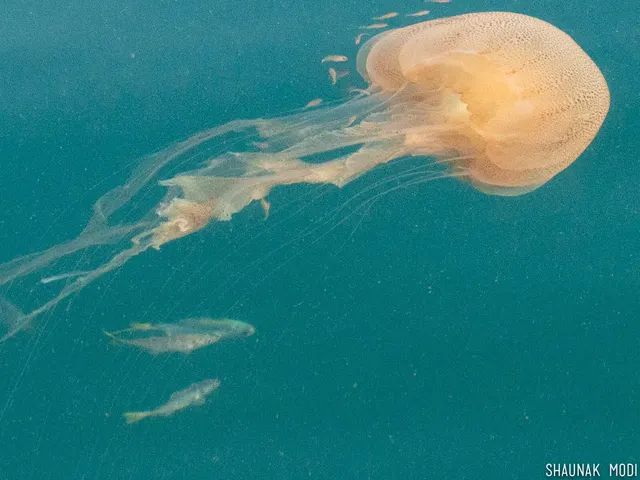
Malaysian sea nettle (Chrysaora chinensis) No. 92

Malaysian sea nettle

Chrysaora chinensis

A jellyfish with long trailing tentacles. Common after the monsoon, and it stings.
Seasonal
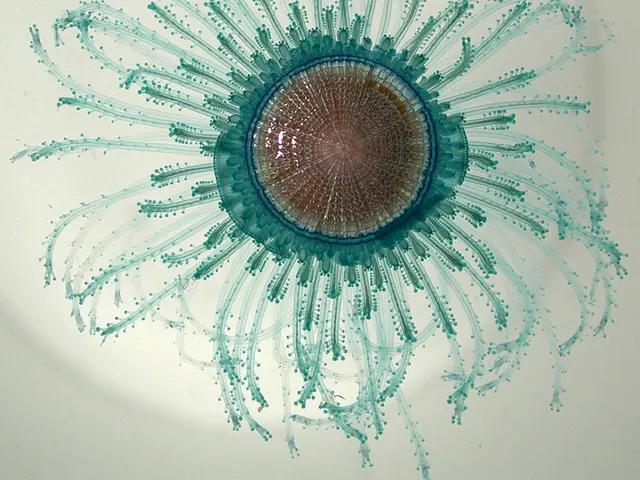
Blue button (Porpita porpita) No. 93

Blue button

Porpita porpita

A blue disc that floats on the sea. Not a true jellyfish, but it can still sting.
Seasonal
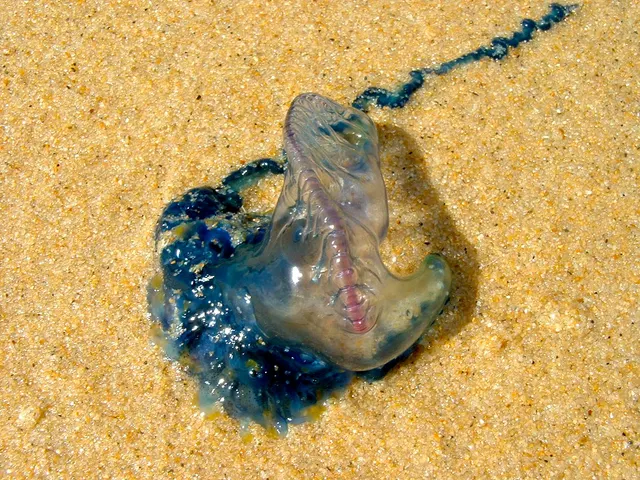
Bluebottle (Indo-Pacific man-o'-war) (Physalia utriculus) No. 94

Bluebottle (Indo-Pacific man-o'-war)

Physalia utriculus

A blue balloon on the sand with long blue strings. Its sting hurts badly. Keep away.

Seasonal
Nothing matches thatTry another name, or clear the filters.
Where to look

Goa dive sites and what lives at each one

Most Goa dives happen around Grande Island. Each site has its own regulars. Tap a name to read about it.

5-12 mDepth

Grande Island reefs

Umma Gumma wall, Turbo Tunnel
All levels

Rocky reef, a small wall and a swim-through with orange sponges and sea whips. Most of the reef fish on this page live here.

3-8 mDepth

Shelter Cove & Bounty Bay

Grande Island
First dives & training

Calm, sandy bays next to the rocks. This is where first dives and courses start, and where the rays and gobies live.

5-15 mDepth

Suzy's Wreck

Grande Island
All levels

A broken old wreck covered in growth. Snappers and sweetlips hide in its shade, and lionfish sit on the metal.

12-16 mDepth

Davy Jones Locker

St George Island
Certified divers

A deeper, broken wreck with current. Bigger fish pass through here: trevally, barracuda and the odd tuna.

6-20 mDepth

Sail Rock

Off Grande Island
Certified divers

A rock pinnacle in open water with current and surge. Schools of fish and the best chance of a hunting trevally.

SurfaceWhere

The boat ride

Sinquerim, Aguada, river mouths
Everyone on board

Keep watching the water on the way out. Humpback dolphins feed close to the coast here all year.

Low tideWhere

Rock pools

Anjuna, Vagator, Dona Paula
No diving needed

Go at low tide with good shoes. Rock pools hold more life than most people expect, including two anemones first described from Anjuna.

BeachWhere

Nesting beaches

Morjim, Mandrem, Galgibaga, Agonda
Nests Dec-Apr

Olive ridley turtles nest on these protected beaches. Keep to the rules of the Forest Department staff on site.

When to come

Best time to see marine life in Goa

The sea is calmest and clearest from November to February. Sites close for the monsoon from June to September, and olive ridley turtles nest on the beaches from December to April.

JanFebMarAprMayJunJulAugSepOctNovDec Diving Turtle nesting Dolphins
  • Best diving
  • Good diving
  • Start or end of season
  • Closed for monsoon
  • Turtles nesting / dolphins seen
  • Possible, fewer trips
Your Goa logbook

How many have you spotted?

Press "Spotted" on any card after a dive or snorkel. Your list stays in this browser on this phone or computer, and we never see it. Print it and bring it on the boat if you like.

Dive responsibly

Look closely, touch nothing

Goa's reefs are small and close to a busy coast. A few simple habits keep them worth visiting.

  • Float, don't kneelGood buoyancy keeps fins and knees off coral and sponges.
  • Hands to yourselfMany animals here sting, bite or are fragile. Looking is free.
  • No chasing, no feedingLet animals come to you. Feeding changes how fish behave.
  • Take only photosLeave shells, starfish and rocks where they are, also in rock pools.
  • Carry your plastic homePlastic on Goa's beaches ends up in turtles and fish.

Stings and spines: if a jellyfish or bluebottle stings you, get out of the water, pick off any tentacles (gloves or tweezers help) and rinse with seawater, not fresh water. Do not rub it, and do not put vinegar on a bluebottle sting. Hot water, no hotter than about 45°C, for 20 minutes eases the pain, or use a cold pack. Get medical help fast if breathing feels hard, the sting is large or near the eyes, or a child is stung. For lionfish, scorpionfish, rabbitfish or stingray spines, soak the wound in hot water, again no hotter than about 45°C, and see a doctor.

See it for yourself

Reading about a moray is one thing. Meeting one is better.

No swimming needed for a first dive. Your instructor stays next to you and points out the animals, and you get the photos.

Questions

Marine life in Goa: common questions

What marine life can you see in Goa?

Goa's dive sites are rocky reefs and old wrecks around Grande Island. On most dives you see moray eels, butterflyfish, angelfish, damselfish, snappers, groupers, lionfish and pufferfish. With some luck you also meet a ray, an octopus, a cuttlefish or a nudibranch, and dolphins often show up on the boat ride. This guide lists 94 species recorded in Goa.

Are there dolphins in Goa, and when can you see them?

Yes. Indian Ocean humpback dolphins live close to the Goa coast all year, around Sinquerim, Aguada, Coco Beach and the mouths of the Mandovi and Zuari rivers. Boats run from October to May, and you often see dolphins on the way to Grande Island. Mornings are usually calmer, which makes fins easier to spot. The species is endangered, so pick a boat that slows down, keeps its distance and never chases them.

Can you see turtles in Goa?

Underwater, rarely. Hawksbill and green turtles have been recorded in Goa's waters, but most divers here do not meet one in a season. On land, olive ridley turtles nest on Morjim, Mandrem, Galgibaga and Agonda beaches, mostly from December to April, and the hatchlings go to sea from about February to May. All sea turtles are protected in India under Schedule I of the Wildlife (Protection) Act.

Are there jellyfish in Goa?

Yes. Sea nettles are most common from November to January, and lifeguards have reported sting swarms on Goa's beaches around then. Bluebottles mostly wash up in the monsoon, July to September. Most stings happen to swimmers near the shore, and a full wetsuit covers most of your body on a dive. If lifeguards put up a jellyfish warning, stay out of the water at that beach. First aid is in the "Look closely, touch nothing" section below.

Are there sharks in Goa?

Not on the dive sites in any number. The small grey bamboo shark is a rare sighting and is harmless. Whale sharks have been recorded off Goa a few times, but that happens once in several years. Divers here do not meet dangerous sharks. Our post on sharks in Goa has the longer answer.

Are there sea snakes in Goa?

Yes. The beaked sea snake is the one found most often, usually caught in fishing nets or washed up on a beach. Sea snakes are highly venomous but rarely bite unless someone handles them. Divers in Goa seldom see one. Never pick up a sea snake on the beach, even one that looks dead.

Is there a coral reef in Goa?

Not a true coral reef like the ones in the Andaman Islands or Lakshadweep. Goa's reefs are rocky. Hard corals such as flowerpot, honeycomb and salad coral grow on the rocks, along with soft corals, sea whips and sponges, mostly around Grande Island.

Can you see fish while snorkelling in Goa?

Yes. At Grande Island you float over the rocks and look down on sergeants, damselfish, butterflyfish, parrotfish and pufferfish, and sometimes a moray. You do not need to be able to swim, and you get about an hour on the reef. See snorkelling at Grande Island for the trip details.

Are there clownfish (Nemo) in Goa?

Not in the wild, as far as the records show. If you see a clownfish photo labelled Goa, it was probably taken in an aquarium or somewhere else. Goa's rock pools do have sea anemones, and two of them, Anthopleura anjunae and Bunodosoma goanense, were first described from Goa.

When is the best time to see marine life in Goa?

The dive season runs from October to May. November to February usually has the calmest sea and the best visibility. Olive ridley turtles nest from December to April. Dive sites close from June to September for the monsoon.

What is the underwater visibility in Goa?

Usually 3 to 10 metres, and up to about 15 metres on the best days. Rivers carry fresh water and silt into the sea, so Goa is never as clear as the Maldives. Most of the life here is small and close to the rocks, so a slow dive near the reef shows you the most.

Is any marine life in Goa dangerous?

Very little, if you do not touch anything. Lionfish, scorpionfish and rabbitfish have venomous spines. Jellyfish and bluebottles sting, and sea urchin spines break off in skin. Moray eels bite if a hand goes into their hole. Sea snakes are venomous but not aggressive. Keep your hands to yourself and follow your instructor.

Image credits and sources (94 photos)

Photos come from Wikimedia Commons and iNaturalist under the licences shown, cropped and resized for this page. A few show a closely related species where no free photo of the Goa species exists; this is noted. Species are included only where there is a published or community sighting record from Goa. Last checked 2026-10-26.

  1. Moorish idol: photo by Diego Delso, CC BY-SA 4.0, via Wikimedia Commons
  2. Pennant & schooling bannerfish: photo by Philippe Bourjon, CC BY-SA 3.0, via Wikimedia Commons
  3. Indian vagabond butterflyfish: photo by Bernard E. Picton BernardP, CC BY-SA 4.0, via Wikimedia Commons
  4. Red-tailed butterflyfish: photo by portioid, CC BY-SA 4.0, via Wikimedia Commons
  5. Threadfin butterflyfish: photo by Bernard E. Picton BernardP, CC BY-SA 4.0, via Wikimedia Commons
  6. Blackwedged butterflyfish: photo by Bernard E. Picton BernardP, CC BY-SA 4.0, via Wikimedia Commons
  7. Blue-ring angelfish: photo by Eddie Maloney from North Las Vegas, USA, CC BY-SA 2.0, via Wikimedia Commons
  8. Yellowtail angelfish: photo by This photo has been taken by Matthieu Sontag (User:Mirgolth) and released under the licenses stated below. You are free , CC BY-SA 3.0, via Wikimedia Commons
  9. Indo-Pacific sergeant: photo by Photo2222, CC BY-SA 3.0, via Wikimedia Commons
  10. Bengal sergeant: photo by Richard Ling from NSW, Australia, CC BY-SA 2.0, via Wikimedia Commons
  11. Blackspot sergeant: photo by Charles J. Sharp, CC BY-SA 4.0, via Wikimedia Commons
  12. Regal demoiselle: photo by Vicencio de la Cruz-Francisco, CC BY 4.0, via iNaturalist
  13. Colombo & threespot damsels: photo by Tim Cameron, CC BY 4.0, via iNaturalist
  14. Yellowfin surgeonfish: photo by Diego Delso, CC BY-SA 4.0, via Wikimedia Commons
  15. Convict surgeonfish: photo by brian.gratwicke, CC BY 2.0, via Wikimedia Commons
  16. Blue-barred parrotfish: photo by Diego Delso, CC BY-SA 4.0, via Wikimedia Commons
  17. Rabbitfish: photo by Rickard Zerpe, CC BY 2.0, via Wikimedia Commons
  18. Bluelined rockcod: photo by portioid, CC BY-SA 4.0, via Wikimedia Commons
  19. Orange-spotted grouper: photo by portioid, CC BY 4.0, via iNaturalist
  20. Cloudy grouper: photo by portioid, CC BY 4.0, via iNaturalist
  21. Mangrove red snapper: photo by 呂一起(Lu i-chi), CC BY 4.0, via Wikimedia Commons
  22. Speckled & blacktail snappers: photo by Paul Asman and Jill Lenoble, CC BY 2.0, via Wikimedia Commons
  23. Sweetlips: photo by Ahmed Abdul Rahman, CC BY-SA 4.0, via Wikimedia Commons
  24. Whitecheek monocle bream: photo by portioid, CC BY-SA 4.0, via Wikimedia Commons
  25. Giant trevally: photo by Dr. Dwayne Meadows, NOAA/NMFS/OPR, Public domain, via Wikimedia Commons
  26. Bigeye trevally: photo by Jens Petersen, CC BY 2.5, via Wikimedia Commons
  27. Great barracuda: photo by Diego Delso, CC BY-SA 4.0, via Wikimedia Commons
  28. Kawakawa (mackerel tuna): photo by Julien Bidet, CC BY-SA 4.0, via Wikimedia Commons
  29. Cobia: photo by Matteo Cassella, CC BY-SA 4.0, via iNaturalist
  30. Fusiliers: photo by BEDO (Thailand), CC BY-SA 4.0, via Wikimedia Commons
  31. Redtooth triggerfish: photo by Diego Delso, CC BY-SA 4.0, via Wikimedia Commons
  32. Titan triggerfish: photo by (c) Jan Ebr & Ivana Ebrová, some rights reserved (CC BY), CC BY 4.0, via Wikimedia Commons
  33. Bridled triggerfish: photo by Randall, J.E., CC BY-SA 3.0, via Wikimedia Commons
  34. Yellow boxfish: photo by portioid, CC BY-SA 4.0, via Wikimedia Commons
  35. Longhorn cowfish: photo by Diego Delso, CC BY-SA 4.0, via Wikimedia Commons
  36. Pufferfish: photo by Elias Levy, CC BY 2.0, via Wikimedia Commons
  37. Spot-fin porcupinefish: photo by Diego Delso, CC BY-SA 4.0, via Wikimedia Commons
  38. Devil firefish (Indian lionfish): photo by Paolo Gamba from Paris, France, CC BY 2.0, via Wikimedia Commons
  39. Mombasa lionfish: photo by Diego Delso, CC BY-SA 4.0, via Wikimedia Commons
  40. Devil scorpionfish: photo by Diego Delso, CC BY-SA 4.0, via Wikimedia Commons
  41. Indian goatfish: photo by Paul Asman and Jill Lenoble, CC BY 2.0, via Wikimedia Commons
  42. Bubblefin wrasse: photo by Srichakra Pranav Tamarapalli, CC BY-SA 4.0, via iNaturalist
  43. Bluestreak cleaner wrasse: photo by Diego Delso, CC BY-SA 4.0, via Wikimedia Commons
  44. Dussumier's rockskipper: photo by Shaunak Modi, CC BY 4.0, via iNaturalist
  45. Stripe-tailed dottyback: photo by AravindManoj, CC BY-SA 4.0, via Wikimedia Commons
  46. Red squirrelfish: photo by This photo has been taken by Matthieu Sontag (User:Mirgolth) and released under the licenses stated below. You are free , CC BY-SA 3.0, via Wikimedia Commons
  47. Cardinalfish: photo by jon hanson from london, UK, CC BY-SA 2.0, via Wikimedia Commons
  48. Shrimpgoby & pistol shrimp: photo by Unknown, CC BY-SA 2.5, via Wikimedia Commons. Photo shows a related shrimpgoby species
  49. Striped eel catfish: photo by Diego Delso, CC BY-SA 4.0, via Wikimedia Commons
  50. Batfish: photo by Alain Feulvarch, CC BY 2.0, via Wikimedia Commons
  51. Spotted seahorse: photo by Emőke Dénes, CC BY-SA 4.0, via Wikimedia Commons
  52. Robust ghost pipefish: photo by Jenny (JennyHuang) from Taipei, CC BY 2.0, via Wikimedia Commons
  53. Honeycomb moray: photo by jon hanson from london, UK, CC BY-SA 2.0, via Wikimedia Commons
  54. White-eyed moray: photo by Nhobgood, CC BY-SA 3.0, via Wikimedia Commons
  55. Highfin moray: photo by Srichakra Pranav Tamarapalli, CC BY-SA 4.0, via iNaturalist
  56. Indian Ocean blue-spotted maskray: photo by Bernard DUPONT from FRANCE, CC BY-SA 2.0, via Wikimedia Commons. Photo shows the Pacific blue-spotted stingray, a close relative
  57. Longheaded eagle ray: photo by Kathy Daniel, CC0, via iNaturalist. Photo shows the closely related spotted eagle ray
  58. Grey bamboo shark: photo by This illustration was made by Citron You must credit this : Citron / CC-BY-SA-3.0, CC BY-SA 3.0, via Wikimedia Commons
  59. Whale shark: photo by Abe Khao Lak, CC BY-SA 4.0, via Wikimedia Commons
  60. Indian Ocean humpback dolphin: photo by Mandy, CC BY 2.0, via Wikimedia Commons
  61. Green turtle: photo by Charles J. Sharp, CC BY-SA 4.0, via Wikimedia Commons
  62. Hawksbill turtle: photo by Thierry Caro, CC BY-SA 3.0, via Wikimedia Commons
  63. Olive ridley turtle: photo by Thierry Caro, CC BY-SA 3.0, via Wikimedia Commons
  64. Sea snakes: photo by Shaunak Modi, CC BY 4.0, via iNaturalist
  65. Octopus: photo by Ahmed Abdul Rahman, CC BY-SA 4.0, via Wikimedia Commons
  66. Pharaoh cuttlefish: photo by portioid, CC BY-SA 4.0, via Wikimedia Commons
  67. Spineless cuttlefish: photo by Shaunak Modi, CC BY 4.0, via iNaturalist
  68. Bigfin reef squid: photo by Diego Delso, CC BY-SA 4.0, via Wikimedia Commons
  69. Nautical phyllidia: photo by Nino, CC BY 4.0, via iNaturalist
  70. Domino nudibranch: photo by Diego Delso, CC BY-SA 4.0, via Wikimedia Commons
  71. Scribbled nudibranch: photo by Seascapeza, CC BY 3.0, via Wikimedia Commons
  72. Ringed chromodorid: photo by Joi Ito, CC BY 2.0, via Wikimedia Commons
  73. Bombay dorid: photo by Shaunak Modi, CC BY-SA 4.0, via Wikimedia Commons
  74. Painted spiny lobster: photo by Unknown, CC BY-SA 2.5, via Wikimedia Commons
  75. Mottled lightfoot crab: photo by Gnaraloo Turtle Conservation Program, CC BY-SA 3.0, via Wikimedia Commons
  76. Red egg crab: photo by Nourish25, CC BY-SA 4.0, via Wikimedia Commons
  77. White-spotted hermit crab: photo by Diego Delso, CC BY-SA 4.0, via Wikimedia Commons
  78. Spider decorator crab: photo by B. P. White, CC BY-SA 4.0, via Wikimedia Commons
  79. Pot-hole sea urchin: photo by Philippe Bourjon, CC BY-SA 3.0, via Wikimedia Commons
  80. Black sea cucumber: photo by Unknown, CC BY-SA 3.0, via Wikimedia Commons
  81. Plain sand star: photo by Sahanawaz Molla, CC BY 3.0, via Wikimedia Commons
  82. Elegant feather star: photo by Peter Southwood, CC BY-SA 3.0, via Wikimedia Commons
  83. Flowerpot coral: photo by Peter Young Cho, MD, CC BY-SA 3.0, via Wikimedia Commons
  84. Pentagonal honeycomb coral: photo by Bondolo, CC BY-SA 3.0, via Wikimedia Commons
  85. Salad coral: photo by Ahmed Abdul Rahman for MDC Seamarc Maldives, CC BY-SA 4.0, via Wikimedia Commons
  86. Leather coral: photo by George Berninger Jr., CC BY-SA 3.0, via Wikimedia Commons. Photo shows Sinularia flexibilis, a close relative of the Goa species
  87. Sea whips: photo by Anne Hoggett, CC BY 3.0, via Wikimedia Commons. Photo shows Junceella fragilis, a close relative of the Goa species
  88. Cup corals: photo by Joi Ito, CC BY 2.0, via Wikimedia Commons
  89. Zoanthids: photo by James Reimer, Angelo Poliseno, Bert Hoeksema, CC BY 4.0, via Wikimedia Commons
  90. Goa's own sea anemones: photo by Harsha Jayaramaiah, CC BY 4.0, via iNaturalist
  91. Sponges: photo by Twilight Zone Expedition Team 2007, NOAA-OE, Public domain, via Wikimedia Commons
  92. Malaysian sea nettle: photo by Shaunak Modi, CC BY 4.0, via iNaturalist
  93. Blue button: photo by Bruce Moravchik (NOAA), Public domain, via Wikimedia Commons
  94. Bluebottle (Indo-Pacific man-o'-war): photo by NaNuu Michael Fried, CC0, via Wikimedia Commons